
Resume af teksten:
Inflationen i Storbritannien forventes at falde til 1,8% i april fra 3,4% i december, hurtigere end Bank of Englands prognoser. Dette skaber grundlag for yderligere rentenedsættelser i marts og juni. Dagligvareinflationen forventes at falde til omkring 4% i april, delvist drevet af lavere globale fødevarepriser. Energi- og vandpriser spiller en rolle i det forventede fald, med prognoser om lavere energiregninger og mindre intense prisstigninger på vand. Udlejning og transport vil også bidrage til at reducere inflationen. Både skattemæssige ændringer og billigere offentlig transport forventes at skære op til 0,3 procentpoint fra inflationen. Cateringbranchen, påvirket af mindre aggressive prisstigninger, vil yderligere bidrage til en lavere inflation. Disse faktorer tilsammen indikerer en kortvarig inflationsnedgang under Bankens 2%-mål.
Fra ING:
We expect headline inflation to fall to 1.8% in April from 3.4% in December, a much faster pullback than the Bank of England is forecasting. It’s another reason to think the Bank has more work to do. We expect rate cuts in March and June
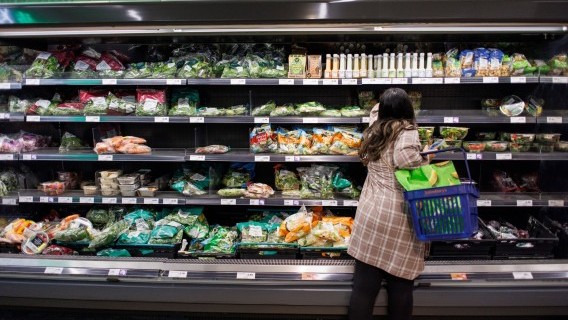
We expect supermarket inflation to drop to around 4% by April – and possibly more
Click here to read our full Bank of England preview ahead of Thursday’s meeting.
How UK inflation can fall below 2% by April
How is it possible that UK inflation – currently the highest in the G7 at 3.4% – can be below the 2% target as soon as April?
For one thing, it would be a significant undershoot of the Bank of England’s November forecasts, which had headline inflation averaging 2.9% through the second quarter.
Yet below target is exactly where we think we’re heading – even if only momentarily. We forecast inflation will drop to 1.8% in April before hovering at the 2% target through the spring and summer. What’s more, we think roughly 0.8 percentage points of the decline from December’s reading is virtually locked in – an artefact of regulated price changes and tax changes.
If we’re right, it’s another reason to think the Bank has more work to do on rate cuts. Remember, the Bank’s hawks have been particularly sensitive to elevated rates of headline inflation and the risk that this could morph into a more persistent episode of price pressure. We expect cuts in March and June.
The chart below shows how there’s a range of drivers – from water and energy bills to school fees – set to pull inflation down over the next few months.
How inflation is set to fall between now and April

Source: Macrobond, ING
How it breaks down
Food inflation : Rebounded to 4.5% in December, the highest in Western Europe and above key Central and Eastern European economies – often a lead indicator for the UK. There’s no obvious reason for the UK to remain an outlier and with key food inputs falling in price globally, we expect supermarket inflation to drop to around 4% by April – and it could ease further than that.
Energy bills: Spot natural gas prices have jumped on colder weather and low European storage levels. But UK bills – set by the regulator – are more contingent on prices for gas delivery further down the line. These have risen less dramatically and energy companies are still forecasting bills to fall 6% in April, shaving 0.3pp off headline inflation. That’s helped by changes at the Autumn Budget, which shift some levies off energy bills and onto general taxation.
Water and sewerage: After 25% bill increases last April to address chronic infrastructure underinvestment, this year the average rise is roughly 5%. This should shave 0.2pp off annual headline inflation from April and will also help lower services inflation, given sewerage falls into this category.
Rents: Private rental growth slowed sharply from nearly 9% to 3.9% by December, with an even steeper slowdown in social rents. January data should show another step down.
Air fares: December’s price rises were bigger than the year before, linked to the choice of measurement day. That pulled up overall inflation, though of course the effect will unwind in January. And the timing of Easter this year means that air fares should be a temporary drag on April’s data, too. Clearly, this is all noise, but between the December and the April reading, the cost of public transport will shave 0.2-0.3pp off inflation – helped also by the freeze in rail fares.
Road tax: Last year’s decision to tax electric vehicles for the first time sparked a sharp rise in personal transport costs (though the impact was revised down last May after a data error). These changes aren’t repeated this year, which takes another couple of tenths off headline inflation from April.
Education: Last January, the government hiked VAT on private schools and that fed through to inflation. There should be no change in education prices at the start of this year, providing another modest leg lower in inflation.
Catering – Restaurants and cafes: Prices surged last winter/early spring due to rising food costs, and ahead of payroll tax increases and a big a jump in the National Living Wage. Catering price rises should be less aggressive this year. Demand is weak – evidenced by falling hiring in the sector – while the minimum wage will rise much less aggressively. This matters because restaurants/cafes make up 40% of the Bank of England’s “core services” measure. It’s a bellwether of underlying inflation in the economy. And crucially, it should show further progress in data available before the March policy meeting.
Hurtige nyheder er stadig i beta-fasen, og fejl kan derfor forekomme.