
Resume af teksten:
EU-ledere mødtes med Mario Draghi og Enrico Letta i Belgien for at diskutere europæisk konkurrenceevne. Mødet fandt sted tæt på Maastricht, hvor den europæiske integration blev styrket i 1992. Diskussionen handlede om at genvinde Europas globale betydning uden at hvile på tidligere resultater. Der var uenighed blandt lande, hvor Tyskland støttede deregulering og energimarkedintegration, mens Frankrig ønskede “Made-in-Europe” politikker og investeringer via eurobonds. Kommissionens præsidenter angav, at Europa følger en tysk-inspireret tilgang med initiativet “One Europe, one market”, med fokus på markedsforenkling, europæiske virksomheder og et samlet energimarked. Dog fremhæves praktiske udfordringer såsom finansieringskilder, og EU’s næste skridt diskuteres på det kommende europæiske topmøde i marts.
Fra ING:
Today, EU leaders met with Mario Draghi and Enrico Letta in a castle in Belgium, only a stone’s throw away from Maastricht, where one of the most ambitious steps of European integration was decided in 1992. Leaders remained far from taking a similar step towards integration today, but the meeting nevertheless brought some hope

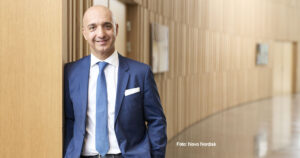
EU leaders, including Mario Draghi (pictured), met at an informal retreat to discuss European competitiveness
When it comes to using audiovisual promotional materials at least, Europe has clearly caught up with the US. On the European Council’s website, today’s so-called informal meeting (these days aka ‘the retreat’) was announced with a fancy video entitled ‘the cards are in our hands’. We still wonder how borrowing elements of the US communication strategy aligns with Europe’s goal of strategic autonomy. But this is a topic for another day.
The subject of today’s meeting was once again centred around the question of how to restore European competitiveness and how to ensure stronger growth in the future. Or, in other words, how to ensure that Europe regains a seat at the table, not by referring to past successes or legacy, but simply because Europe matters globally, both economically and politically.
Fortunately, European leaders did not appear to question the need for action and instead seemed united in recognising the urgency to act. When it comes to how to act, however, views have been and still are less united. In the run-up to today’s meeting, the almost traditional rift between European countries surfaced once again. While Germany put its money on deregulation and simplification, further integration of the single market, and a more European energy market, France pushed for Made-in-Europe policies to protect domestic industries and more public investments, preferably funded by eurobonds. In the past, these kinds of stand-offs have ended with standstills.
Europe has a plan: One Europe, one market
At least judging from the comments by European Commission President Ursula von der Leyen and European Council President Antonia Costa after the meeting, Europe appears to be following the German approach, but without additional fiscal spending.
Europe’s answer to geopolitical shifts, the emergence of China as a systemic rival, and its own lack of strategic autonomy is encapsulated in the initiative “One Europe, one market”, which is expected to be completed by the end of 2027. This plan consists of three main pillars:
Reducing the administrative burden through simplification, an end to the so-called goldplating (ie additional national legislation on top of European legislation) and so-called sunset clauses.
Improving the internal market by reviewing merger rules to create global European champions, a capital markets union, and the so-called 28th regime; legislation that allows for the establishment of truly European companies.
Building one energy market with cross-border energy grids.
To underline that at least some European leaders are serious about advancing integration, the European Commission intends to propose more regulations and fewer directives. Regulations must be applied uniformly across all EU member states, whereas directives allow for significant national variation. In addition, the option of enhanced cooperation was mentioned several times. Enhanced cooperation enables a group of at least nine EU countries to move ahead with further integration. The truth, however, is that this mechanism has never been used in practice for economic policy.
The proof is in the pudding
All of this is promising, even if the practical political hurdles remain significant. Take the aim of ending gold‑plating: it may sound straightforward, but in practice it means transferring national powers to Brussels, which in practice remains a very painful step. And the largest elephant in the room remains the question of how to pay for everything and whether these measures will be enough to really kick-start private investment.
What today’s announcements may amount to is a substantial clean‑up effort coupled with a clear attempt to move closer to a genuine, fully functioning single market, even if achieving the latter will require far more than what leaders discussed today. Just think of the harmonisation of taxes, pensions, social security, labour laws, to mention a few. Finally, without financial incentives, reviving private investments will remain difficult. So why not start a kind of sovereign wealth fund in Europe, funded by private and public money, and open to retail investors – a fund that then invests in pan-European projects in infrastructure, defence and AI?
Admittedly, we have been following European politics for too long to get excited like teenagers at the first sign of ambition. In fact, Europe has never really suffered from a lack of plans or grand vision; the real obstacle has almost always been weak implementation and national interests taking precedence over European ones. Whether this time will be any different remains to be seen. The next milestone comes in a month’s time: the European Summit in March, where today’s broad ideas will already need to be translated into concrete action.
Hurtige nyheder er stadig i beta-fasen, og fejl kan derfor forekomme.