

Resume af teksten:
Brændstofpriserne stiger igen, hvilket rammer husholdninger i eurozonen hårdt, og priserne nærmer sig niveauerne fra energikrisen i 2022. Stigningerne ses især ved benzinstationerne, hvor husholdninger oplever den økonomiske belastning direkte. I lande som Tyskland og Italien er priserne for en 50-liters tank benzin eller diesel steget betydeligt siden de seneste geopolitiske begivenheder. Skattemæssige forskelle og årlige køresaldi bidrager til variationer i, hvor hårdt stigningerne rammer. Især tyske husholdninger står over for en større del af deres disponible indkomst, der nu går til brændstof. Alt imens makroøkonomiske forudsigelser står over for usikkerhed, tyder det på, at husholdningernes disponible indkomst vil blive yderligere presset, hvilket kan hæmme privatforbruget i eurozonen.
Fra ING:
Fuel prices are surging again, and for many households, filling up now hurts almost as much as during the 2022 energy crisis
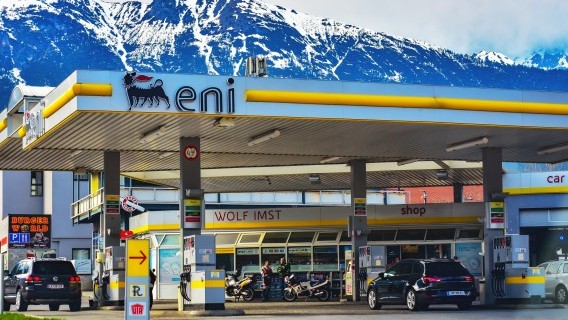
In some eurozone countries, the cost of a 50‑litre tank of petrol has risen to levels last seen in 2022 when Russia invaded Ukraine
It’s a fast-moving environment, which currently only allows to think in terms of scenarios rather than conviction calls. And while forecasters around the globe are currently grappling to adjust their macro forecasts – uncertain about how long the war in the Middle East and the disruption to the Strait of Hormuz will last – one part of the economy is already feeling the economic pain: households. More precisely, car-driving households. Any surge in oil prices is felt most immediately in one place – the petrol station.
Pain at the pump for European consumers
Our colleague Warren Patterson has written extensively on recent oil price developments and the possible scenarios ahead . We also know that it takes a while for the full macro impact of higher energy prices to unfold. Industrial companies typically hedge (at least some of) their energy purchases in forward markets, while households’ utility contracts usually run for one or two years. This was, for example, one of the reasons why during the 2022 energy crisis, it was energy companies that ran into financial trouble first, as they were unable to pass on higher procurement costs to end consumers. One place where consumers are not shielded by hedging strategies or longer‑term contracts, however, is at the petrol station.
Even before oil prices reached this week’s painful highs, the jump in retail fuel prices had already pushed the cost of a standard 50‑litre tank of petrol to levels last seen in 2022 in several major eurozone economies. Compared with the week before the joint US‑Israeli strike on Iran, the price of a tank of unleaded petrol has risen by between €4.50 in Italy and €13.00 in Germany. For diesel, the increase has been even steeper, ranging from €8.40 in Italy to €21.50 in Germany. Relative to the 2025 annual average, German households have been hit particularly hard: they are now paying roughly €17.00 more per tank of unleaded petrol and around €28.00 more for diesel than they did on average last year. Dutch households are facing a similarly sharp increase in fuel costs.
Cost of filling a 50-litre tank with unleaded petrol or diesel

Source: European Commission; ING Economic & Financial Analysis
The fact that prices within the eurozone, and across fuel types, vary widely in general is also due to excise duties, for which there is a minimum threshold of €0.359 per litre of unleaded petrol and of €0.330 per litre of diesel set by the EU. However, most member states have set higher values, resulting in an average excise duty on petrol of €0.570 per litre and of €0.468 per litre on diesel. At €0.845 per litre, the duty on unleaded petrol is highest in the Netherlands, while at €0.673, Italy has the highest duty on diesel. These tax differentials are the main reason why two households facing the same global oil price can still experience very different fill‑up costs.
The extent to which these price increases cut into household budgets also depends heavily on how much people drive per year. At almost 14,000 kilometres, Austria tops the 2023 list – the most recent date for which comparable data is available, followed by Germany with around 12,500 kilometres per year. This means the same price increase hits Austrian and German households much harder than, for example, Italians, who drive only around 8,000 km per year.
Average annual fuel expenses

European Commission; Odysee Mure; ING Economic & Financial Analysis; based on an average fuel consumption of 7.35 liters per 100 kilometers; 2026 is based on the assumption that the price from the 10th calendar week will apply for the rest of the year.
Looking at driving behaviour in recent years shows that cutting fuel costs by simply driving less is unlikely. Significant deviations from the long‑term average only occurred during the pandemic years, when widespread working‑from‑home arrangements reduced the need to commute. Gasoline prices were not a motive. Since then, mileage patterns have started to normalise, suggesting limited scope for households to offset higher prices by changing their driving habits.
Ultimately, this implies that eurozone households will once again need to devote a larger share of their disposable income to fuel, with German households facing the largest increase. For them, the share of disposable income spent at the fuel pump is expected to rise to 3.5%, up from 2.8% last year. Overall, the share of disposable income devoted to fuel ranged from around 2% in the Netherlands and 4.5% in Portugal last year.
Drivers might slam the brake on any recovery in private consumption
Although we currently assume in our base case scenario that the impact of the war in the Middle East on markets, and thus on the eurozone economy, should not be long-lasting, the recent rise in energy prices is likely to put additional strain on consumer confidence, which is already markedly low. Given the old adage that gasoline prices rise like a rocket but fall like a feather, it is not just confidence that is being hit, but actual purchasing power.
Hurtige nyheder er stadig i beta-fasen, og fejl kan derfor forekomme.