
Resume af teksten:
Den Europæiske Centralbanks (ECB) seneste møde viste en markant skift til en mere stram pengepolitik uden at indikere en hastig reaktion. Mødet afslørede bekymringer om inflationrisici fra krigen i Mellemøsten og den økonomiske vækst, der kunne være for optimistisk vurderet. ECB bemærkede, at den aktuelle situation er forskellig fra 2022, med stigende energipriser og potentielle forsyningskædeproblemer. Markedsforventninger om aggressive rentestigninger af ECB anses for overdrevne. Mødet understregede en mere restriktiv pengepolitik i takt med højere obligationsrenter og mindre likviditet, mens risikoen for økonomisk skade er større end i 2022. ECB overvejer muligheden for en ‘forsikrings-rentestigning’, hvis stigende inflation bliver et vedvarende problem, påvirket af faktorer som blokader i Hormuz-strædet.
Fra ING:
A hawkish pivot but no need to overreact. This is the main takeaway from the just-released European Central Bank minutes. Market expectations about aggressive ECB tightening still look overdone
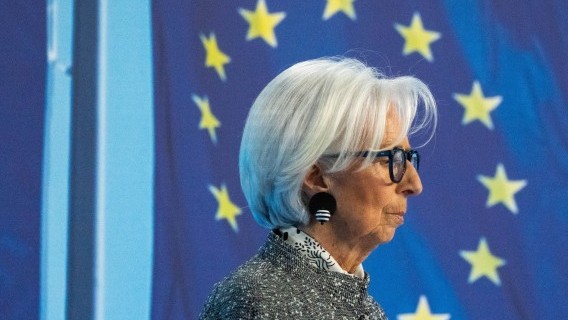
European Central Bank President Christine Lagarde last month
At the last meeting, one month ago, the ECB was already sounding more alarmed about the inflationary risks stemming from the war in the Middle East and made a clear hawkish pivot. The just‑released minutes reinforce this shift and portray an ECB in no hurry to react. In the good old days, the central bank would have called this approach ‘being vigilant’.
Here are some of the highlights:
Base case too benign . “It was argued that the baseline projection for growth could still be seen as too benign, especially since the war could precipitate non-linear effects on growth.”
Accentuate the positives . “A diversion of tourism from the Middle East to the euro area could boost the economy, while the latest trade deals with India and Australia could support growth over the longer term.”
Overall risks to the growth outlook tilted to the downside, and to the upside for inflation . “Members assessed that the risks to the growth outlook were tilted to the downside, especially in the near term. The war in the Middle East was a downside risk to the euro area economy, adding to the volatile global policy environment.”
Stronger pass-through than in 2022? Really? “It was argued that the pass-through from higher energy prices to goods inflation might be stronger than had been assumed in the baseline projections. In addition, some prospective fiscal support measures in response to the shock could put upward pressure on inflation.”
Too optimistic on wage growth? “On the other hand, it was argued that the upward revision to the staff projection for wage growth seemed somewhat surprising given the slowing wage growth in the fourth quarter of 2025, the recent downward revision of the ECB wage tracker for 2026, the cooling labour market and weaker expected economic growth due to the energy price shock.”
Inflation outlook fundamentally changed. “Starting with the inflation outlook, the war in the Middle East had fundamentally changed the outlook and also made it significantly more uncertain.”
On 2022 vs 2026. “Overall, although memories of the 2022 shock were still fresh, the current situation was clearly distinct from 2022 and it was important to recognise the differences between the two episodes.”
All in all, the minutes reflect the ECB’s hawkish pivot at the last meeting but also illustrate that the ECB is in no rush to act.
2026 is not 2022, or is it?
Looking ahead, the next ECB meeting is already scheduled for two weeks from now. Recent comments by ECB officials suggest that the ECB, like so many others, has gradually shifted its base case scenario, even though there won’t be an official update to the staff projections at the next meeting. The benign scenario is clearly outdated and the stagflationary impact of the higher energy prices and potential supply chain disruptions is growing by the day.
Financial markets are still pricing in aggressive ECB rate hikes in the course of this year. Obviously, nothing is impossible these days. However, it’s pricing that seems to follow the 2022 playbook and the assumption that the ECB will be mainly driven by the idea that it reacted too late to surging inflation in 2022. I tend to disagree. Back in 2022, the global economy was emerging from lockdown with healthy balance sheets and an almost unstoppable consumer appetite to go out and spend – the perfect breeding ground for fast-spreading inflation. This time, the inflationary impact of an energy price crisis is likely to be more muted, as consumers will be far more reluctant to open their wallets. You can already see that reluctance in reported willingness-to-spend indicators, which are currently well below 2022 levels. At the same time, the hit to economic activity could be sharper than in 2022.
What is also different at the current juncture is that back in 2022, the ECB was emerging from an extremely accommodative stance and normalising policy from negative interest rates and quantitative easing. With hindsight, the biggest policy mistake was probably the delayed response to an energy price shock that ultimately morphed into a broader inflation surge. This time around, higher bond yields and dropping excess liquidity are already part of a more restrictive monetary policy stance.
On hold in April, but moving towards an insurance hike in June
Back to the ECB’s April meeting, it’s obvious that the ECB’s famous ‘good place’ is no more. Instead, the ECB is back in crisis mode, shifting its focus away from longer-term projections to actual developments, back to a “driving at sight” approach. Key variables to watch are actual inflation data, survey‑based longer‑term inflation expectations, and wage developments, all of which will be weighed against the risk of slowing economic activity and financial stability concerns. However, only limited data will be available in two weeks: March inflation, a handful of country inflation releases for April, and initial estimates of first‑quarter GDP on the day of the meeting. In all honesty, that does not look sufficient to move the needle, unless the ghosts of 2022 are really keeping policymakers awake at night. Given the latest comments by ECB officials, they are not.
Looking beyond the April meeting, we think the ECB – like us – is expecting an initial inflation wave, starting with gasoline prices, followed by knock-on effects on transportation costs, food prices and other industrial products. As long as this remains a single, time‑limited wave, there is no need for ECB rate hikes. That said, three potential pain points remain for the ECB: a psychological one, ie headline inflation above 4%, reviving uncomfortable memories of 2022; an analytical one, ie core inflation above 3%, signalling broader price pressures; and a credibility one, ie a surge in survey‑based inflation expectations, which would make inaction increasingly difficult to justify. The longer the blockade of the Strait of Hormuz lasts, the higher the likelihood that some of these pain points will be hit. This is why we now see the ECB announcing at least one insurance rate hike, following the tradition of insurance cuts. Some would go so far as to call it a policy mistake.
Hurtige nyheder er stadig i beta-fasen, og fejl kan derfor forekomme.