


Resume af teksten:
Europa har ifølge teksten oplevet fortsat vækst og begrænset inflation seks måneder efter Iran-krigens start.
Energi bidrager nu med under en fjerdedel af de fire procentpoint til eurozonens inflation, som den gjorde i juli 2022.
Inflationen for energifølsomme varer og tjenester i eurozonen har ifølge analysen næsten ikke ændret sig.
Fødevareinflationen er faldende og tæt på nul, mens fødevarepriserne i Storbritannien er lavere end tre måneder tidligere.
ECB-medlemmer Isabel Schnabel og Dimitar Radev har peget på risiko for yderligere renteforhøjelser.
Teksten forventer, at energiprisernes påvirkning af inflationen kan komme med omkring seks måneders forsinkelse.
Markederne indregner mindst to yderligere renteforhøjelser fra både ECB og Bank of England.
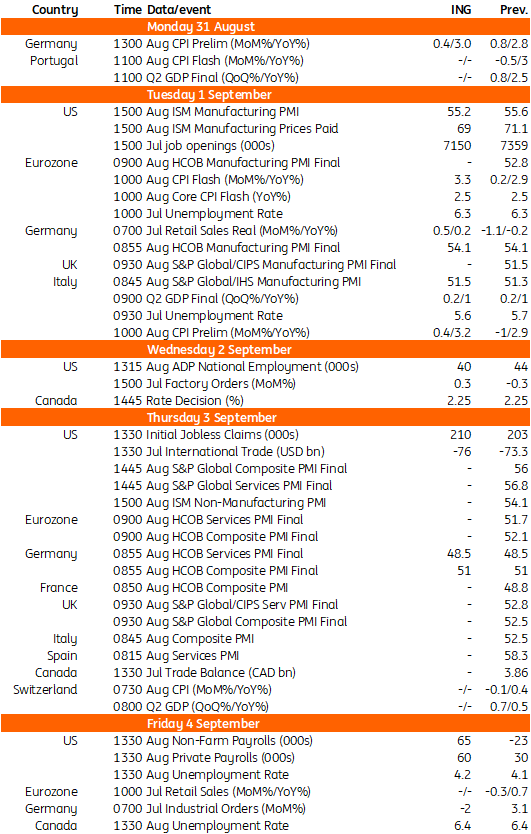
I næste uge offentliggøres blandt andet amerikansk jobrapport, eurozonens inflationstal og arbejdsløshedstal.
Fra ING:
Six months into the Iran War, Europe is faring a lot better than many people had feared, don’t you think? Growth has so far held up. And inflation hasn’t taken off as some had expected. ‘Stagflation’ concerns have subsided.
That shouldn’t be too surprising. Though it hasn’t always felt like it from the daily oil price rollercoaster, this crisis has so far been much milder for Europe than the fallout of the Ukraine invasion four years prior.
By July 2022, energy was contributing a whopping four-percentage points to eurozone inflation. Today, it is adding less than a quarter of that. The numbers are similar in Britain too. Even with the latest rise in natural gas prices, this basic fact is unlikely to change dramatically.
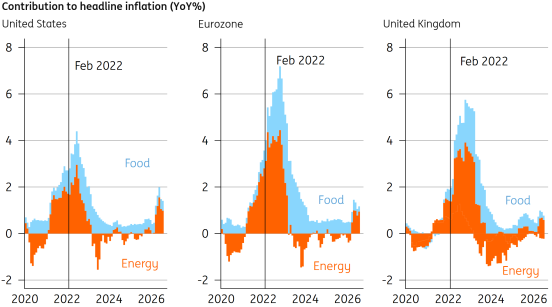
Faced with a much smaller shock, we also shouldn’t be too surprised that there has been no sign of the energy spike broadening out to other areas of the core inflation basket.
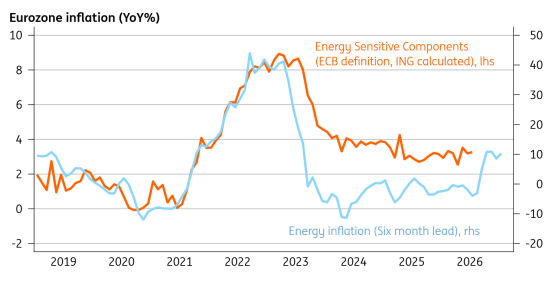
I’ve recreated an index that the ECB put together a few years ago, showing the inflation rate for goods and services that are indirectly sensitive to energy prices. This includes everything from air fares to courier costs, plant prices to cafés – and it represents around a third of the total inflation basket.
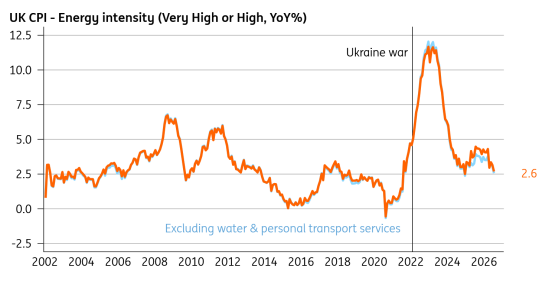
From a quick glance at the result, you wouldn’t know there had been a war at all. The inflation rate of this basket has barely budged. And when I run a similar exercise for the UK, the inflation rate for energy-intensive items has actually fallen this year – even when you exclude the impact of last year’s one-off spikes in water bills and road tax.
So why, then, are the central bank hawks still worried about the upside risks to inflation? Influential board member Isabel Schnabel said this week that rates “must rise further”, and her colleague from Bulgaria, Dimitar Radev, described the October and December meetings as “live”.
The answer lies in lags. Inflation has further to rise – expect to see that in next week’s data. My chart above of energy-sensitive eurozone inflation shows that it tends to follow energy prices with a six-month delay. In those cafés I mentioned earlier, it takes time for higher wholesale gas prices to hit their heating (or cooling!) bills, and longer still for them to get passed into the price of a cappuccino. The hawks are understandably worried that the impact is yet to show up.
But this caution is overdone. Just look at food inflation. Yes, most models will tell you that the peak impact from the Iran War won’t show up until next spring. Yet those same models say that we should be feeling something by now. And the simple fact is that we aren’t.
Quite the opposite. Food inflation is trending down – and it’s virtually zero. Here in Britain, the level of food prices is actually lower than it was three months ago. Across the three major economies in Eastern Europe, annual food inflation is negative.

This should reassure the hawks in Frankfurt – and here in London – for two reasons. First, because if the Iran War was going to show up anywhere, it would be here. And second, food is often seen as a key driver of consumer inflation expectations. People know what their weekly shop costs, just like they know how much it costs to fill up their car. Lower food inflation suggests that those officials who care deeply about these expectations can relax.
And anyway, those expectations only matter if workers have the power to demand higher pay. Which, at the moment, they don’t appear to. Another handy ECB index of “wage sensitive” inflation, which I’ve recreated, has fallen over the course of this year.
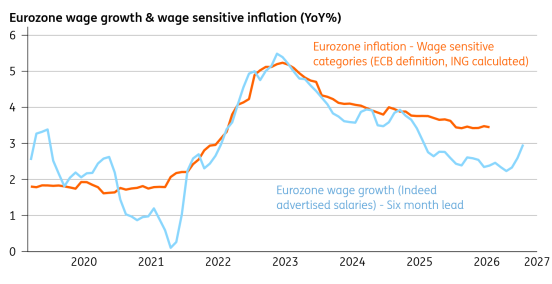
This is a slow-moving beast, admittedly. Wage growth is famously the last thing to move after a shock. And, curiously, we have seen a slight pick-up in the growth of advertised salaries, according to the Indeed hiring agency. But that doesn’t square against the ECB’s forward-looking indicator of negotiated wage growth. Nor are we seeing any discernible increase in the proportion of service sector firms looking to increase their prices over the coming months.

None of this is exactly a winning formula for higher interest rates. Yet markets are still pricing at least two more hikes from both the ECB and the Bank of England. Policy rates one year from now are still expected to be roughly a full percentage point higher than they were before the war began.
The hawks would point at growth. Confidence has recovered, the Purchasing Managers’ indices (PMIs) look solid. But ask yourself why.
Is Europe’s economy actually starting to run hot, implying that monetary policy is too accommodative – and even that the neutral rate sits above the 2-2.5% level commonly assumed? That is a valid debate in the US, with its AI boom and seemingly unstoppable stock market. But in Europe? Sure, you can point to things like Germany’s defence industry build-out. And all that infrastructure spending too.
Really, though, growth has surprised on the upside largely because inflation hasn’t. It’s as simple as that. Added to which, the war has actually helped Europe’s manufacturers, winning orders from Asian competitors more acutely affected by the closure of the Strait of Hormuz. That presumably won’t last.
The ECB can legitimately hike rates in September, particularly against a backdrop of rising natural gas prices. But anything more than that, as my colleague Carsten wrote this week , would take it into restrictive territory without a compelling reason for doing so. And here in Britain, I don’t think it’s going to be long before we’re talking about the first rate cut.
Six months ago, I – and many others – argued that this wasn’t 2022 all over again. Now, we finally have some data to prove it.
James Smith
United States (James Knightley)
Jobs Report (Fri): The jobs report is the big event of the week and will be a key determinant of whether the Fed hikes rates on 16 September. The jobs numbers had shown renewed signs of life between March and May, but those gains have subsequently been trimmed back by revisions, while June was a disappointing 20k and July saw an outright fall. We expect a modest recovery of perhaps 65k in August, but the low-hire, low-fire narrative persists. Tariff-related caution and higher borrowing costs are likely to keep that in place for the rest of the year.
Unemployment Rate (Fri): The unemployment rate has remained surprisingly low, but this is down to steep falls in the participation rate with significant numbers of people leaving the workforce. This is partly demographic-driven, but also likely reflects some disillusionment given the lack of hiring in the economy.
ISM Manufacturing PMI/ISM Non-Manufacturing PMI (Tue/Thu): We also have the widely watched ISM business surveys, which are currently at levels historically consistent with the US economy growing in the region of 2-2.5%YoY. We don’t expect any major changes to this situation. We will also see the Federal Reserve’s Beige Book, which is the anecdotal survey on the state of the US economy and has historically had an important influence over Fed decisions. Consequently, we will pay close attention to their inflation assessment.
Eurozone (Bert Colijn)
Inflation Rate (Tue): For the eurozone, the inflation rate for August is the most important indicator for next week. With energy prices having risen again, headline inflation is set for another increase. But the central bank focus will be on core inflation. The PMI showed a surprisingly benign picture. Despite more upbeat growth figures and rising energy prices, businesses indicated slower growth in input and selling prices in August. If we do see a jump this month, that will be another hawkish sign for the ECB.
Unemployment Rate (Tue): Also out next week is the unemployment rate. Not necessarily market-moving, but it will provide information on how wage growth will develop in the months ahead. We’ve seen an uptick in wage growth recently, which has surely been noticed by the ECB. While worries about a wage-price spiral would be premature, continued labour market strength will add to wage pressures in the months ahead.
Kilde: ING, https://think.ing.com/articles/think-ahead-whats-changed-since-the-2022-energy-shock/
Hurtige nyheder er stadig i beta-fasen, og fejl kan derfor forekomme.