Resume af teksten:
Tirsdag oplevede en omfattende nedsalg af dollaren, uden en klar årsag til bevægelsen. Præsident Trump udtrykte ingen bekymring over en svagere dollar, hvilket kan pege på, at USA ønsker en svagere dollar af konkurrencehensyn. Dollarens fald var drevet af FX-beslutningstagere, og hvis dollaren bryder sidste års lavpunkt, kan et yderligere 3% fald være muligt. Den Europæiske Centralbank (EZB) holder øje med EUR/USD parity, da en stærkere euro kan påvirke inflationsmålet. Ungarns centralbank fastholdt sin tone og overvejer muligvis en rentenedsættelse i februar. Den svage dollar og Ukrainesituation har støttet forinten, men fremtidige rentebevægelser kan skabe pres. I Tjekkiet signalerer centralbanken også mulige rentenedsættelser i løbet af året, afhængigt af januars inflation, hvilket øger presset på korunaen.
Fra ING:
Tuesday saw the dollar sell-off extend across the board. There was no fresh catalyst for the move, and President Trump’s comments that he was not concerned by the weaker dollar came late in the day. If the buy-side has decided to raise its dollar hedge ratios on US policy risk and a sense that Washington wants a weaker dollar, it makes no sense to stand in the way
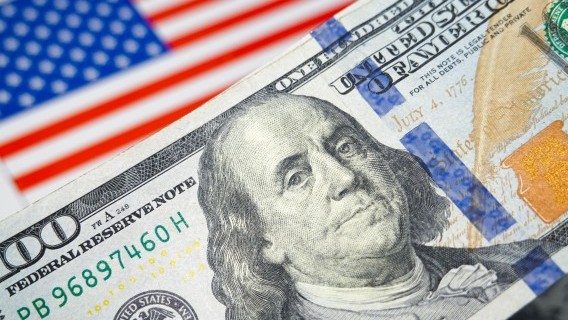

USD: Dollar takes out major support – another 3% drop possible
The dollar sold off across the board yesterday. This was not a move led by US yields nor the underperformance of US asset markets. Instead, the move looked to be driven by FX decision-makers – be they asset managers hedging US risk or the speculative community (hedge funds and CTAs) adding to short dollar positions on range breakouts.
The ramifications of the Fed potentially participating in USD/JPY intervention continue to seep through the market. Does the US administration just want a stronger yen to help stabilise the JGB and US Treasury market? Or does the US want a broadly weaker dollar for competitive purposes at a time when the US consumer is starting to feel the strain? In the distant past, it tended to be Republican administrations that preferred a weaker dollar. President Trump’s lack of concern about the weaker dollar in comments late yesterday will feed the latter theory. Presumably, there will now be renewed questions for Scott Bessent as to the US Treasury’s dollar policy.
We had not been expecting the extent of this dollar sell-off so quickly. Instructive will be how the dollar performs around tonight’s FOMC meeting. Our take is that a Fed shifting to a pause could provide the dollar with some support. However, were any rally to prove weak and the dollar to end up lower on the day, even if short-dated US yields rose, then it would signal very bearish dollar momentum. Additionally, after the US market closes tonight, Meta, Microsoft and Tesla release earnings. Any misses here could be another source of weakness for the dollar, where so much US consumption is dependent on the stock market. We note, however, that Dutch chipmaker ASML has just released strong results.
Should DXY manage to break fully clear of last year’s lows near 96.20, we could be well on the way to a decent 3% leg lower in the dollar. It is hard to back that up with fundamentals, but the burden really is now on the dollar to prove otherwise.
Chris Turner
EUR: They will be watching in ECB towers
It was instructive that, as EUR/USD was breaking higher yesterday, short-dated EUR swap rates were coming lower. One of the threats to the neutral ECB policy outlook has been the stronger euro. And yesterday’s EUR/USD price action suggests the doves at the ECB might be right to worry that a stronger euro could see the ECB missing its inflation target to the downside. We think that is definitely the story for the pricing of Swiss National Bank policy. The Swiss franc seems in strong demand both as a hedge for the dollar debasement trade and for a fiscal risk premium emerging more broadly. The one-month Swiss OIS, priced six months forward, is now around -10bp on expectations that the Swiss National Bank might have to take the policy rate negative again later this year.
The jump in crude oil prices due to the risk of conflict in Iran is not euro-positive. But let’s see if the dollar breakout story is more dominant. Failure of EUR/USD to break back under 1.1910/20 now keeps bullish momentum intact. In fact, it now looks like Monday’s gap higher could be a very bullish ‘breakaway gap’, which could see the move extend all the way to 1.23/24, as unlikely as that seems. The FX options market is certainly on edge here.
Chris Turner
HUF: The market gives the central bank the green light
Yesterday’s meeting of the National Bank of Hungary did not bring many fireworks and the bank board chose to maintain its previous tone. We did not see much direct indication that the NBH should cut rates at the next meeting. At the same time, we did not see any change in forward guidance compared to December. This means that higher-than-expected December inflation is not such a problem. At the same time, attention is clearly on January inflation, which will be key. The governor mentioned that inflation in January may be below 3%, which seems that the bar is not too high for a rate cut, and we still expect a rate cut in February after yesterday.
The market reaction was perhaps more interesting than the meeting itself. EUR/HUF ended the day around 380, the lowest in the last two years. At the same time, rates continue to price in more rate cuts across the curve. This unusual combination indicates to us that the market is essentially giving the NBH the green light for a rate cut in February. At the same time, pricing does not seem stretched and if inflation surprises significantly upwards in January, the NBH has room to hesitate for a while. However, the FX reaction yesterday also suggests that rate cuts should not be a big problem for the forint after all.
For now, we can expect the weak US dollar and some hopes for progress in the Ukraine peace deal to continue to support the forint. This should keep the central bank on the dovish side. However, in the medium-term, we still believe that the very beginning of the cutting cycle will put pressure back on the forint given the heavy long carry positioning.
Frantisek Taborsky

CZK: Rate cut discussion to open in February
Deputy Governor Jan Frait opened a round of media interviews yesterday ahead of the Czech National Bank’s blackout period on Thursday. According to him, a rate cut could be discussed at the February meeting. However, the main reason should be global factors. This seems a bit counterintuitive from the perspective of inflation expected to fall below the central bank’s target in January for local reasons. At the same time, the deputy governor mentioned the scope for 50bp rate cuts this year. This is roughly in line with the previous words of the CNB’s other Deputy Governor, Eva Zamrazilova. Although we will probably hear from other members of the bank board in the coming days, it seems that two key decision-makers are already on the dovish side, even without knowing January inflation.
Overall, this increases the likelihood that rate cuts will come sooner or later this year. The market has shifted the pricing dovish downward again and the lowest FRAs stopped at 3.20% yesterday. It is expected that after such dovish words today, we will see the fixing drift lower and the market probably still has room to price in more rate cuts. However, similar to the case of Hungary, everything will depend on January inflation.
A February rate cut seems unlikely to us unless inflation surprises below 1% YoY. Otherwise, we assume that the first live meeting is only in March, or the Bank Board will wait until the next forecast in May. However, in general, the market is moving in a dovish direction, which will create pressure on the koruna. EUR/CZK is less sensitive to global factors compared to CEE peers and the interest rate differential has a greater impact here in our view. Therefore, we expect EUR/CZK to drift back to 24.350-400; however, the global story may still slow this movement.
Frantisek Taborsky
Hurtige nyheder er stadig i beta-fasen, og fejl kan derfor forekomme.