

Resume af teksten:
Finansmarkederne er præget af forsigtighed, da der er usikkerhed om konflikten i Mellemøsten og stigende inflationstryk. Renter på kort sigt forventes at forblive faste, hvilket modvirker investering i risikostrategier. Hormuz-strædet er lukket, hvilket bidrager til olieprisens stigning og presser centralbanker til at reagere på inflation. USD forbliver stærk med usikkerhed i Golfen, uden tegn på dollarstress i markedet. Fokus er på forbrugertillidsindeks fra Michigan, som kan påvirke renter og USD. Euroen påvirkes af stigende kortfristede renter og øget inflation, med potentiel rateforhøjelse fra ECB i fokus. I Schweiz kan stigende oliepriser føre til en stærkere EUR/CHF, da Schweiz er mindre påvirket af oliechokket. I Ungarn viser markedet styrke efter valget, med fokus på den kommende centralbankmøde og potentielle renteændringer.
Fra ING:
Risk markets remain in a cautious mood. Clarity over the next phase in the Middle East conflict is in short supply, and it now looks as though inflation pressures may be broadening. Short-dated interest rates look set to stay firm and prevent investors from flooding back into risk-positive, dollar-negative strategies
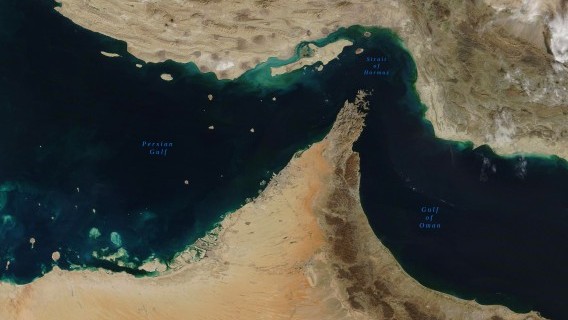
The longer the Strait stays closed, the bigger the oil shock – and this is set to keep short‑dated yields firm as markets price central banks responding to inflation

USD: Weekend caution prevails
A week ago, both Iran and US President Donald Trump were declaring that the Strait of Hormuz was open for business. Today, the US Navy’s blockade means the Strait is firmly shut. The longer the Strait remains shut, the greater the oil shock and the more distant the idea of Brent crude trading back to levels near $80 or below. This view is very much dominant in the interest rate market, where short-dated yields remain very firm on the view that many central banks will have to react to this inflationary shock. Evidence that higher energy prices were feeding into selling prices emerged through the eurozone PMI data released yesterday and in the Japanese CPI data released overnight . Evidence of the stagflationary shock and the increased likelihood that central banks will likely have to apply the brakes is a negative for global growth and negative for pro-risk/dollar-negative strategies.
For today, the uncertainty over events in the Gulf probably means investors will not want to go home short dollar balances. As yet, there are no signs of stress in dollar funding markets, and we treat news of the UAE requesting a USD swap line from the US Treasury as more akin to a precautionary credit line than the need to address any systemic dollar shortages. We are more interested in whether another potential $20bn commitment on the US Treasury’s Exchange Stabilisation Fund will raise queries over its limitations.
Given the absence of Federal Reserve speakers due to the blackout period and away from social media posts on the Gulf, today’s US focus will be on the final release of data from the University of Michigan Consumer Sentiment Survey. The Fed is very interested in inflation expectations right now. The provisional release of the April data had 5-10Y inflation expectations at 3.4%. Any upward revision here could unnerve the Fed and lift short-dated US yields and the dollar. We also note that the 5Y5Y USD inflation swap has risen to 2.50% from 2.40% this week – the highest since early February. This could also set us up for a slightly hawkish FOMC meeting next week.
DXY looks biased to 99.15/20, above which it could fill a gap to 99.50.
Chris Turner

EUR: Feeling heavy
Short-dated yields are on the rise again as oil pushes higher and signs emerge that businesses are able to pass higher input costs on to their customers. While the 67% probability attached to a June rate hike looks too low and will probably be corrected over the coming weeks, that may not necessarily help the euro. The European Central Bank needs to get ahead of inflation expectations to help the euro, not merely match them. And two-year EUR/USD real interest rate differentials are not particularly supportive of EUR/USD right now. Ahead of next week’s ECB meeting, please see our market ECB cheat sheet here .
For today, the focus will be on the April release of the German Ifo. Consensus expects a slight fall in the expectations component to 85.5 from 86.0. Any dip sub-85 would probably be a market mover here.
1.1630 looks to be the direction of travel for EUR/USD today.
Chris Turner
CHF: Higher oil prices are bullish for EUR/CHF
If we are moving into a period of higher oil prices, higher inflation and greater chances of central banks tightening, then EUR/CHF could be headed higher. We say this because Switzerland is one of the least exposed countries to fossil fuels. Here, hydro, nuclear, and solar make up around 95% of Switzerland’s electricity production. That means the country is less exposed to the oil shock, and the Swiss National Bank will be one of the last to react with any tightening. The SNB said as much in its minutes of the March policy meeting .
Higher oil prices will therefore see ECB policy repriced more hawkishly than that of the SNB – which should be a EUR/CHF positive. On this subject, look out for any comments today from the SNB President Martin Schlegel, who will be speaking at the bank’s Annual General Meeting. EUR/CHF can trade back up to 0.9250/60 if we are right in our thinking.
Chris Turner
HUF: Market ready to fade any weakness
Hungary remains the main topic in the CEE region even two weeks after the general election. Although there are no clear next steps that we can expect in the coming days, next week we will see the first central bank meeting since the elections, and in early May, a new government will be officially appointed. Tuesday’s National Bank of Hungary meeting should be of great interest because, for the first time since the elections, we’ll hear the official tone of the central bank. The market is already pricing in two rate cuts in the one-year horizon, but not in the coming months. However, the central bank will not rush, and we won’t see much of a visible dovish shift due to significant FX strengthening. We are still in the middle of an energy shock with an unclear end; short-term pricing may see some pressure next week.
At the same time, yesterday’s market move in FX and rates was the first test of significant positioning, but also a good example of market thinking. During the day, HUF rates traded up to 20bp higher – a significant underperformance – but by the end of the day, the long end in particular closed only 6-7bp higher, similar to CEE peers. This shows us that the market is generally bullish on Hungary even after the significant post-election rally, and any sell-off immediately faded, especially at the long end, which we think is the most attractive.
On the other hand, at the short end of the curve, the market is already expecting some rate cuts, and we don’t think the NBH will rush too much. We therefore expect the curve to continue to flatten and the country premium to be compressed at the long end. EUR/HUF should continue to trend down, but at a slower pace given the heavy long forint positioning. Even so, we think that 350 by mid-year should not be too complicated a target in our forecast.
Frantisek Taborsky
Hurtige nyheder er stadig i beta-fasen, og fejl kan derfor forekomme.