
Resume af teksten:
Markedet forblev roligt forud for Kevin Warshs høring som Fed-nomineret formand, hvor han understregede Fed’s uafhængighed uden at påvirke forventninger til renteændringer. USD og aktiemarkedet oplevede kun mindre udsving under høringen. En våbenhvile i Hormuzstrædet blev forlænget, men militære fremskridt er nødvendige for at styrke EUR/USD. I mellemtiden har ZEW-indikatorens fald ikke ændret markederne væsentligt, da aktører venter på deeskalering. I Storbritannien blev inflationen påvirket af benzin og olie, hvilket sandsynligvis ikke vil føre til en renteforhøjelse fra Bank of England. Tyrkiets centralbank forventes at fastholde renten på 37% midt i den aftagende Iran-konflikt og stigende oliepriser.
Fra ING:
Markets’ calm ahead of Warsh’s hearing and the ceasefire deadline proved the right call. The Fed chair nominee was dismissive of rates comments but firmly reiterated Fed independence. Meanwhile, the ceasefire extension can keep EUR/USD close to 1.1750 for now, but a break higher requires tangible progress on the Strait of Hormuz
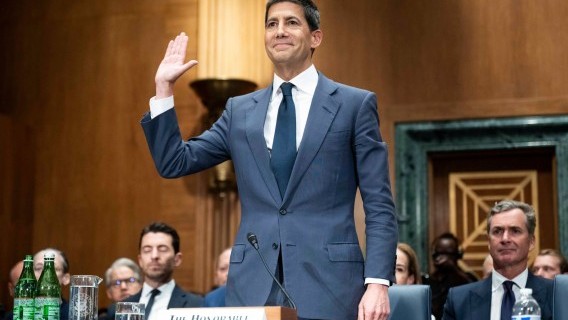
Kevin Warsh’s Senate hearing in Washington on 21 April

USD: Teflon equities remain a hindrance
Markets had priced in no excess volatility ahead of yesterday’s Senate hearing of Fed Chair nominee Kevin Warsh, and that proved to be the right call. Warsh was firm enough on Fed independence to prevent any Treasuries‑USD sell‑off, while remaining sufficiently elusive on policy to avoid any impact on rate expectations. That said, there are a few points worth highlighting. Warsh said the Fed needs a “new framework”, which we assume refers to balance sheet reduction (we discussed this here ), but he didn’t offer details. He also defended his AI-driven productivity theory – which might lead to lower rates – and said he does not believe in forward guidance.
More than yesterday’s hearing, Warsh’s confirmation still appears to hinge on Senator Thom Tillis’ satisfaction with the handling of Powell’s criminal probe. A possible compromise could involve shifting the investigation from the DoJ to Congress, an option Tillis has openly welcomed. The risk that Warsh is not confirmed before the 15 May term expiry remains non‑negligible, but it should not matter materially as long as he becomes chair ahead of the 17 June FOMC meeting.
The dollar had a couple of fluctuations – mostly on the strong side – during Warsh’s testimony, but was left by and large untouched. War headlines remain very inconclusive. President Trump’s announcement of a last-minute ceasefire extension likely validates some degree of optimism that hasn’t left USD crosses despite the deadline approaching. But the situation in the Strait of Hormuz remains as unclear as ever, with the US blockade still in place and reports that a UK container ship was shot at by the Iranians yesterday.
A key missing link for a more durable dollar rebound remains the equity backdrop. The S&P 500 is up around 3% since the war began and the MSCI World about 1%, while the underperformance of European equities is not pronounced enough to drive EUR/USD lower. In this environment of resilient risk sentiment, DXY may struggle to climb back toward 99.0.
The US data calendar is light today. Yesterday, alongside solid March retail sales, ADP payrolls posted a second consecutive very strong weekly gain. The four‑week moving average now stands at 54.75k, implying a monthly increase well above 200k. However, no other labour market indicators point to comparable strength, and, given the loose relationship between ADP’s weekly series and both NFPs and ADP’s own monthly release, markets are likely to remain cautious about extracting too much signal from it.
Francesco Pesole
EUR: Stabilising on cautious optimism
The larger‑than‑expected drop in ZEW indicators marginally set the tone for a softer EUR/USD session yesterday. Markets remain well aware, however, that these high‑frequency indicators can rebound quickly in the event of de‑escalation.
Key levels for the pair are becoming increasingly clear. Tangible progress toward a deal – both on the military front and on Hormuz – is needed to keep EUR/USD above 1.180. Otherwise, markets appear comfortable maintaining an optimism‑leaning stance around 1.172‑1.177. Dip‑buying around 1.167‑1.170 is likely to persist unless diplomatic efforts break down completely, which would open the door to downside risks below the 1.160 area.
At the same time, front-end rates are proving less supportive. The two-year EUR:USD swap rate differential has rewidened (in favour of USD) by 25bp since the -60bp peak on 7 April. While headlines chaos makes pricing volatile, Lagarde implicitly pushing back against a hike in April has prompted greater caution in pricing more than two ECB hikes this year.
Francesco Pesole
GBP: No surprises from inflation
We think EUR/GBP has limited downside potential after breaking below 0.870 over the past 24 hours. While the Mandelson scandal does not look sufficient on its own to topple Prime Minister Starmer, markets will likely reassess the PM’s position following the 7 May local elections, where Labour is expected to perform poorly.
Risk‑on episodes tend to weigh on EUR/GBP, but rate differentials usually emerge as the more durable driver. In that context, the 41bp of tightening priced into the GBP curve looks stretched in our view relative to the 54bp of expected ECB tightening.
There were no major surprises in the UK inflation data published this morning. Higher petrol, diesel and heating oil costs pushed headline CPI up by around 40bp, while some core components (notably clothing) acted as a drag. The rise in services inflation was largely airfare-related – core services was flat by our economist’s calculations. As expected, this tells us little about second‑round effects, which will only start to show up in food and then services over the coming months. The Bank of England will instead focus on surveys, including Friday’s Decision Maker Panel, which so far look benign.
That should be enough to keep the BoE on hold next week and, in our view, until year‑end. On our base case, inflation peaks briefly around 4% and oscillates between 3.5‑4% in 2H, though current gas pricing points to a peak closer to 3.5% – still not enough to force a hike.
Francesco Pesole
TRY: CBT resists calls for rate hike
Turkey’s central bank will decide rates today for the second time since the start of the US-Iran conflict, which has significantly affected Turkey’s outlook given the economy’s highest openness to oil imports in the region and strong pass-through to inflation. At the same time, the domestic disinflationary trend had already seen some bumps before the conflict began.
The CBT reiterated in February its commitment to tightening monetary conditions in the event of a marked deterioration in the inflation outlook. In line with this stance, it suspended one‑week repo auctions and allowed the ON rate to rise toward the upper limit of the interest rate corridor following the escalation of the US‑Iran conflict. In March, the conflict escalated and the market began to bet on rate hikes in Turkey. Given some signs of an early end to the conflict, the market has calmed down since then and expectations are for stable rates today but with some risk of a rate hike. Surveys look similar. We expect rates to remain unchanged at 37.00% today.
The Turkish lira remains on a steady path of weakness. However, in April we saw several days of weakness exceeding carry or leaving little on the table. At the same time, we saw a significant reduction in long positions by about half, according to our estimates since the start of the US-Iran conflict. However, we believe that the FX regime will remain unchanged and inflows will gradually return as the conflict calms down.
Frantisek Taborsky
Hurtige nyheder er stadig i beta-fasen, og fejl kan derfor forekomme.