Resume af teksten:
Tysklands inflation steg i april, hovedsageligt drevet af højere energipriser. Den nationale inflationsrate var 2,9% år-til-år sammenlignet med 2,7% i marts. Også den europæiske inflationsmåling stod på 2,9% år-til-år. Kerneinflationen faldt til 2,3% år-til-år fra 2,5% i marts. Energiprischokket forventes at føre til knock-on effekter på transportomkostninger, fødevarepriser og industrielle produkter i løbet af de næste måneder. Inflationen ser ud til at kunne stige yderligere til ca. 4% inden sommeren. De nuværende inflationsdata lægger pres på den Europæiske Centralbank forud for et møde, med fokus på stagflationære tendenser. Kernens inflationens nedgang kan give ECB kortsigtet ro, men debatten om rentestigninger forventes at intensiveres.
Fra ING:
Germany’s April data shows that, at this point, rising inflation has remained an isolated energy price shock

Germany’s inflation increase in April was almost exclusively driven by higher energy prices
It could have been worse. German inflation increased in April, but slightly less than feared, as the inflationary shock currently remains an isolated energy price shock. While the national inflation measure came in at 2.9% year-on-year, from 2.7% YoY in March, the European measure also stood at 2.9% YoY. Core inflation dropped to 2.3% YoY, from 2.5% YoY in March.
First inflation wave in full swing and more yet to come
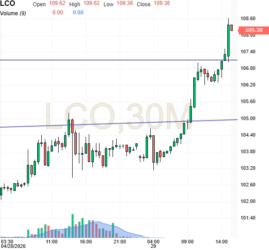
Today’s inflation data shows that the first inflation wave is in full swing. The April increase was almost exclusively driven by higher energy prices. However, knock-on effects on transportation costs, food prices and other industrial products will follow over the coming months. Needless to say, the longer the war in the Middle East and the blockade of the Strait of Hormuz last, the higher the likelihood that the initial energy price shock will not only have knock-on effects but could also be accompanied by additional supply chain frictions and, in turn, a self-enhancing inflationary spiral.
In this regard, a lot is currently being said about comparing the current oil price shock with that of 2022. In fact, the surge in inflation in 2022 started already in 2021, when German inflation jumped from 2% YoY to 6% YoY within five months – which illustrates how fast a severe exogenous shock can actually translate into soaring inflation.
However, we still don’t think that we will see a repetition of the 2022 double-digit inflation rates. The current price shock is hitting the German economy in a weaker state than in 2022, and the ability (and willingness) of consumers to actually pay higher prices is clearly limited. Instead, it will be companies in the middle of the supply chain that might be squeezed the most; they’ll be unable to fend off higher wholesale prices but also unable to pass these higher costs onto customers.
As a result, German inflation looks set to increase further to some 4% by summer, but any rise beyond that would require even higher oil prices and substantial fiscal stimulus to offset weaker demand.
German inflation data adds to stagflationary evidence ahead of tomorrow’s ECB meeting
Turning to the ECB, German inflation data adds to the evidence of increasing stagflationary pressures ahead of tomorrow’s policy meeting. As much as the rise in actual inflation and inflation expectations will fuel the rate hike debate, growing signs of adverse growth effects will make aggressive rate hikes less straightforward.
In this regard, the fact that German core inflation actually dropped should provide the ECB with some comfort, at least in the near term. Looking further ahead, calls for ECB rate hikes will get louder. However, even though the ECB’s primary policy goal is price stability, it’s hard to see that it would really want to fight an exogenous supply shock at the cost of worsening an economic downturn.
Hurtige nyheder er stadig i beta-fasen, og fejl kan derfor forekomme.