
Resume af teksten:
Industriens produktionstal bekræfter, at sektoren er i en langsom genopretningsfase efter tre års nedgang. December så et fald på 0,4% i sæsonkorrigeret produktion månedligt, efter en stigning på 1,5% i november. Årligt steg outputten med 3,2%. Månedsfald blev set i forbrugsgoder og mellemvarer, mens energi og kapitalgoder steg. På årsbasis faldt industrioutput gennemsnitligt med 0,2% i 2025, mens produktionen inden for fremstilling faldt med 0,5%. Farmaceutiske og elektroniske sektorer førte væksten, mens tekstiler, transportudstyr, og kemikalier oplevede de største fald. I fjerde kvartal 2025 steg produktionen med 0,9%, hvilket støttede en 0,3% BNP-udvidelse. For 2026 forventes en årsproduktionstigning på over 1%. Forretnings-tillidsdata indikerer en gradvis genopretning, med stærkere ordrer men svage forbrugergoder. Tysklands investeringer kan påvirke den fremtidige vækst, med risiko hovedsageligt forbundet med forsinkelser. Kortvarig geopolitisk usikkerhed virker mindre truende for vækstudsigten.
Fra ING:
Industrial output data, broadly in line with expectations, confirms that the sector has entered a recovery phase after three consecutive years of contraction though this is still very gradual
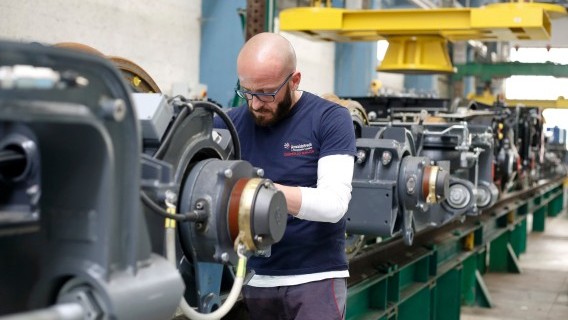
Seasonally adjusted industrial production fell by 0.4% month‑on‑month in December (following a 1.5% increase in November), according to the latest ISTAT release. On a yearly basis, working‑day‑adjusted output increased 3.2% (from +1.4% in November).
Across the main industrial groupings, December saw monthly declines in consumer goods (both durable and non‑durable) and intermediate goods, while energy and capital goods posted gains.
With December data now available, we can draw some conclusions for 2025 as a whole. On average, industrial production fell 0.2%, while manufacturing output declined 0.5%. At the sector level, pharmaceuticals and electronics/instrumentation led growth, followed – at some distance – by the food industry. The largest drops were recorded in textiles & apparel, transport equipment, and chemicals.
Importantly, the fourth quarter of 2025 showed a 0.9% increase in production versus the third quarter, which helped support the 0.3% GDP expansion in 4Q from the supply side. The statistical carry over for seasonally adjusted industrial production from 2025 into 2026 stands at 0.7%. Assuming the gradual improvement we foresee for 2026 materialises, average annual production growth should exceed 1%, marking a return to positive territory after three consecutive years of declines.
Looking at January business confidence data, the recovery still appears very gradual. Manufacturing confidence improved, supported by stronger order assessments, but not yet enough to suggest a cyclical acceleration in output. A more decisive reduction in inventories is still missing. Clearer signals on this front are emerging from the capital goods segment, while consumer goods remain weaker.
At this stage of the cycle, a stronger rebound in industrial production seems linked to the timing of Germany’s ambitious infrastructure and defence investment programmes. Given their endogenous nature, implementation risks appear limited mainly to delays, rather than execution. For once, at least in the short term, geopolitical uncertainty seems to pose less risk to the growth outlook.
Hurtige nyheder er stadig i beta-fasen, og fejl kan derfor forekomme.