Resume af teksten:
Den amerikanske økonomi viser stærke resultater trods stigende globale energipriser forårsaget af krigen i Iran og lukningen af Hormuz-strædet. Arbejdsmarkedet i USA viser robust jobvækst, mens arbejdsløsheden forbliver lav. Lønvækst modereres, hvilket indikerer en balanceret arbejdsmarkedssituation uden stor inflationsrisiko. På trods af stigende energipriser forventes det, at Federal Reserve undgår rentenedsættelser i den nære fremtid. Derimod ser Schweiz en stigning i inflationen til 0,6 % i april, hovedsageligt på grund af højere brændstof- og energipriser. Alligevel forventes den schweiziske nationalbank at fastholde renten på 0 %, da bredere inflationspres mangler. Banken er klar til intervention på valutamarkederne for at forhindre hurtig styrkelse af schweizerfrancen.
Fra Julius Bär:
US labour market: Too good for rate cuts
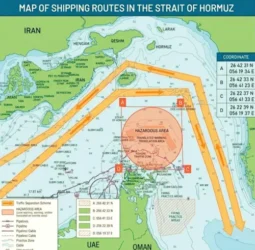
Considering the global energy price surge accompanying the war in Iran and the closure of the Strait of Hormuz, the US economy is performing exceptionally well. The latest labour market data revealed stronger, broader, and cyclical job growth, with unemployment remaining low. Moderating wage growth points to a balanced labour market with little risk of inflation.
In light of the significant inflation surge caused by higher energy prices, the absence of additional domestic inflationary pressures enables the US Fed to adopt a more cautious attitude towards rate cuts rather than indicating rate hikes. Private expenditure on energy has increased and appears to be crowding out expenditure on other items. Thus, consumption adjusted for price increases should be rather weak in 2026, while nominal spending should grow strongly, supporting corporate revenue and earnings growth.
At the start of the year, corporate investment spending in technology and related areas remained the main driver of US economic growth, and recent labour market data suggests that building the necessary infrastructure in these areas will result in a notable growth tailwind. The freight sector accounted for more than half of April’s job growth, confirming the solid business survey readings for the manufacturing sector. The fact that the US is now a net energy-exporting economy creates another tailwind for US industrial activity in the presence of higher oil prices, despite the less favourable impact on consumption.
In summary, solid US economic momentum in the face of elevated energy prices makes a resumption of rate cuts by the Fed quite unlikely in the short term. Only a weakening of growth momentum over the medium term and a stabilisation of inflation will open the door to rate cuts towards the end of the year. The likelihood of a rate cut by the Fed appears highest for September this year, with the possibility of a later cut only under certain pre-conditions.
Switzerland: Inflation does not warrant SNB rate action
Swiss inflation rose to 0.6% in April, its highest level since December 2024, driven by higher fuel and energy prices. Consumer prices rose 0.6% year on year in April, up from 0.3% in March, driven mainly by higher prices for heating oil, petrol, and diesel. Higher jet‑fuel costs also resulted in an increase in air transport prices and package holidays abroad. However, outside the energy components, inflation remains subdued. Core inflation, which excludes energy, fuels, and fresh and seasonal products, eased to 0.3% y/y in April, and domestic inflation remained unchanged at 0.5% y/y. There is therefore little evidence of broader inflationary pressures emerging. Switzerland’s favourable energy mix, low energy intensity, and strong currency limit the pass‑through of elevated global energy prices to broader consumer prices.
Against this backdrop, we continue to expect the SNB to keep its policy rate at 0% for the foreseeable future. At its March meeting, the SNB signalled that it views the risks to medium-term price stability as tilted to the downside, driven by Swiss franc appreciation rather than upside risks stemming from higher energy prices.
The SNB also reaffirmed its increased readiness to intervene in foreign exchange (FX) markets to counter rapid and excessive appreciation of the Swiss franc. We expect FX interventions to remain the SNB’s primary tool to contain sharp, safe-haven-driven appreciation pressures. SNB balance-sheet data suggests that in March, the SNB intervened not only verbally but also through active purchases to curb CHF strength. However, our estimates indicate that FX purchases were moderate, at around half of the volumes of those seen in April 2025.
What does this mean for investors?
For investors, this divergence reinforces the case for selective positioning: sustained US growth supports equities and delays rate-sensitive plays, while Switzerland’s low-rate environment and stable inflation backdrop continue to favour defensiveness and currency-driven strategies.
Hurtige nyheder er stadig i beta-fasen, og fejl kan derfor forekomme.