


Referat fra Authers kommentar:
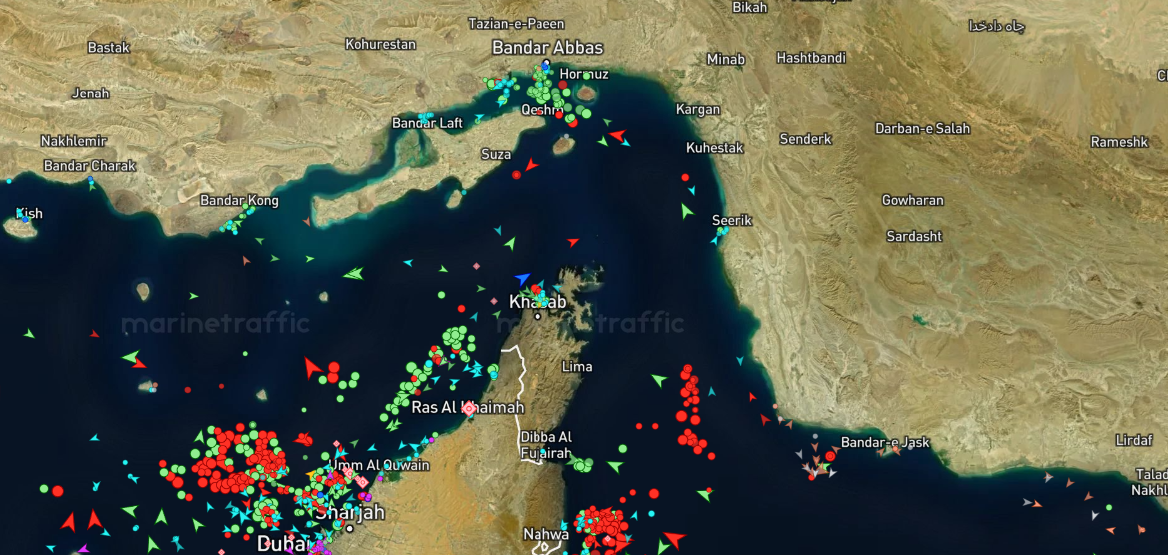
Kommentaren beskriver, hvordan olieprisen igen er blevet en vigtig drivkraft for aktiemarkedet efter den fornyede konflikt med Iran. Da spændingerne steg omkring Hormuzstrædet og Bab el-Mandeb, steg olieprisen og pressede aktierne. Omvendt udløste Donald Trumps beslutning om at afblæse varslede angreb et kraftigt fald i olieprisen og gav aktiemarkedet medvind.
Markedets reaktion virker dog paradoksal, fordi risikoen for eskalation fortsat er høj. Houthierne truer skibsfarten i Det Røde Hav, og konflikten risikerer samtidig at blive koblet tættere sammen med krigen i Ukraine. Forudsigelsesmarkeder viser desuden faldende tro på, at trafikken gennem Hormuzstrædet normaliseres inden årets udgang.
Alligevel synes oliemarkedet at regne med, at problemerne forbliver håndterbare. Futures peger på fortsat høje, men ikke ekstreme oliepriser. Samtidig er investorer og medier tilsyneladende blevet trætte af gentagne historier om trusler mod de strategiske farvande. Kombinationen af lavere oliepris, aftagende opmærksomhed og forventning om en håndterbar energikrise har derfor gjort det muligt for aktiemarkedet at stige til nye rekorder.
Oil on Troubled Waters |
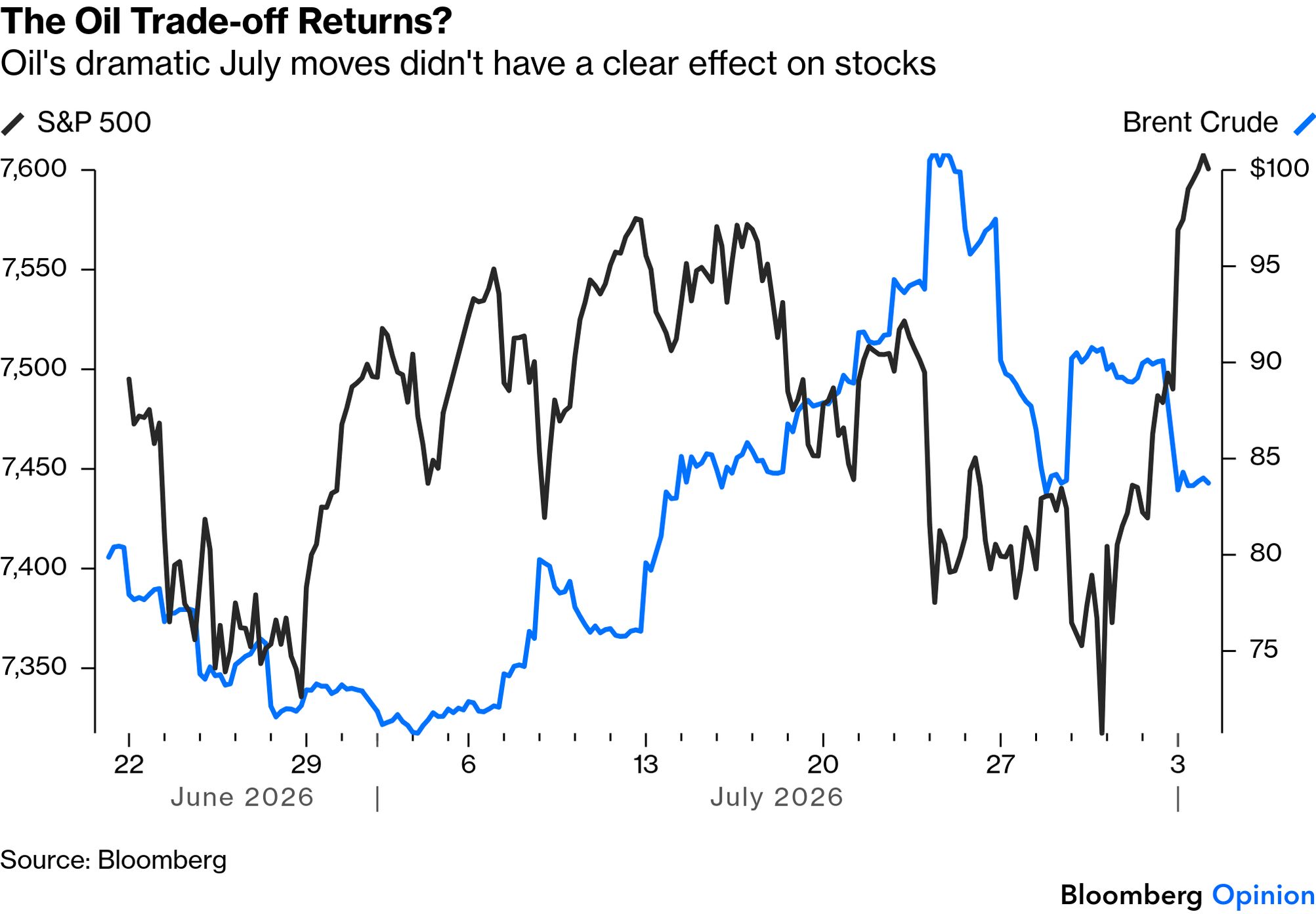
In the first month of the Iran conflict, there was a clear negative correlation between the crude oil price and the stock market. Higher oil was bad for stocks. That relationship didn’t work from April through June as Washington switched to seeking peace, and the countries cycled through various ceasefires. But since the conflict resumed, it’s been different. Oil prices surged again as Iranian proxies threatened to shut off the Bab el-Mandeb while hostilities returned to the Strait of Hormuz, contributing to turbulence for stocks. And Monday’s sharp fall in crude as Trump once more called off threatened attacks seemed to have a big effect:
What’s odd is that we’ve seen this movie before. The president threatens an escalation and then calls it off because he says Iran is willing to negotiate, only to find that they aren’t; rinse and repeat. The sharp fall in the oil price looks odder still because the risk of escalation appears to be rising. This isn’t due just to the involvement of the Houthis in Yemen, who can plausibly threaten to cut off shipping access to the Red Sea and Suez Canal. It’s also because of potential linkage with the war in Ukraine. To quote Christopher Granville of TS Lombard:
Russian support for Iran was cited by [Ukraine President Volodymyr] Zelenskyy to justify drone attacks on Iranian shipping in the Caspian Sea on 25 July – a move that merges the two wars into each other in a way that Kyiv clearly judges will strengthen its position. US casualties resulting from such ‘escalation contagion’ reduces the chances of a revived Memorandum of Understanding with Iran in time to avert a rising energy crunch.
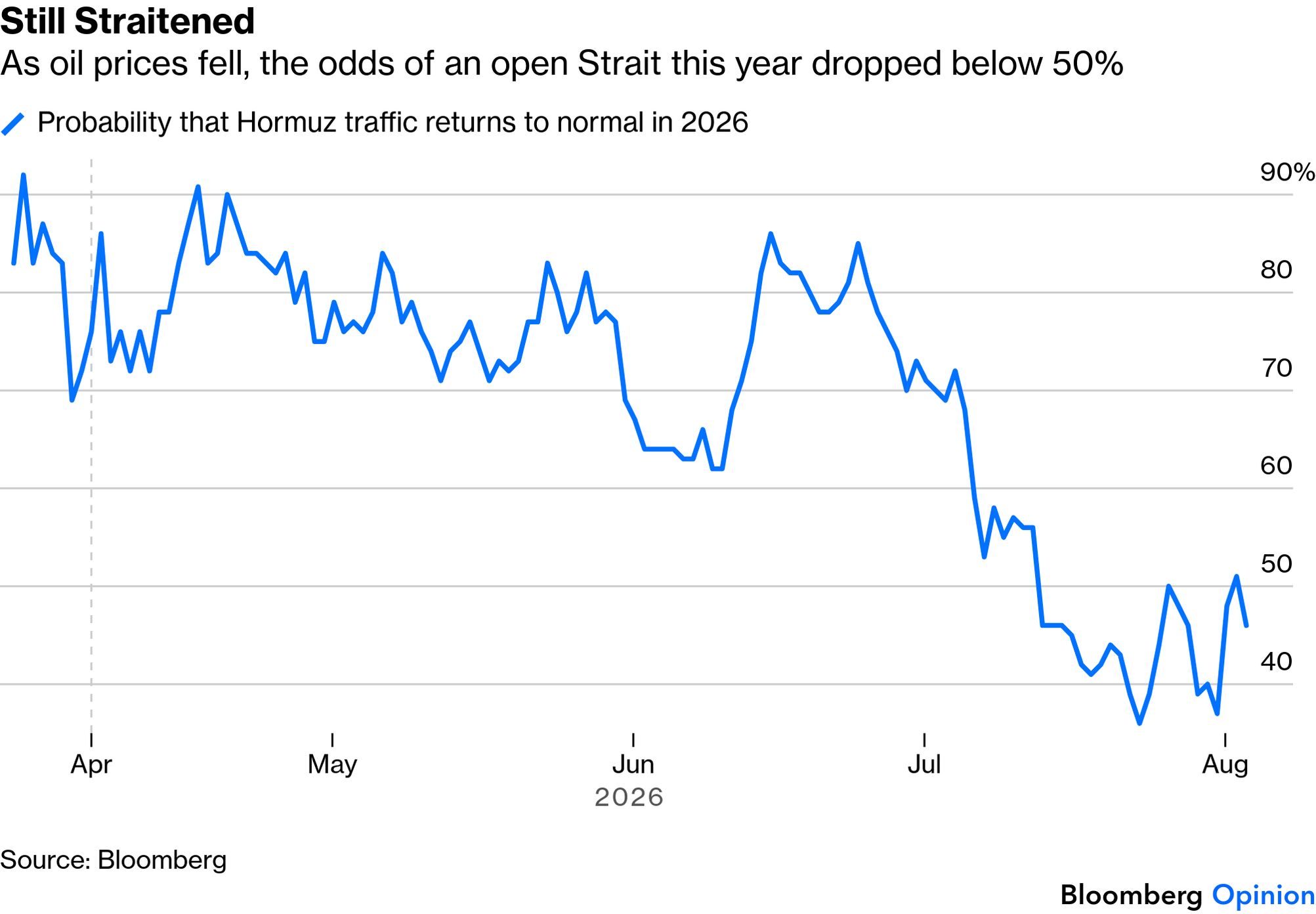
Prediction markets suggest that confidence in a deal that can reopen the Strait of Hormuz on a stable basis continues to dwindle. The odds on Kalshi that traffic is back to normal by the end of this year are below 50%, and fell during Monday even as the oil price was dropping:
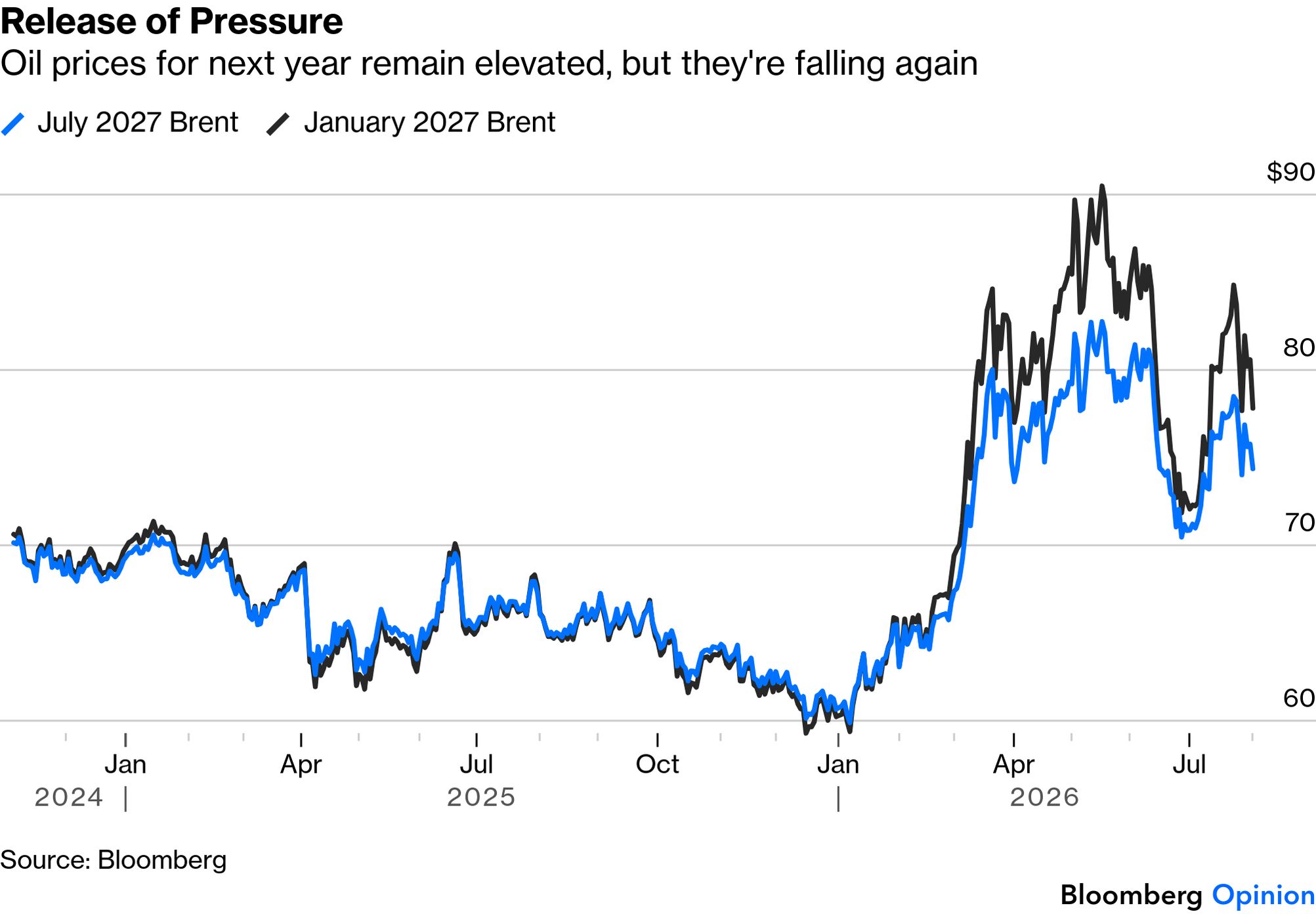
But despite this, the prevailing belief in the oil market appears to be that the problem will remain manageable. Futures prices suggest that Brent crude will still be elevated six and 12 months hence, but at levels that are not wildly above what was expected a year ago:
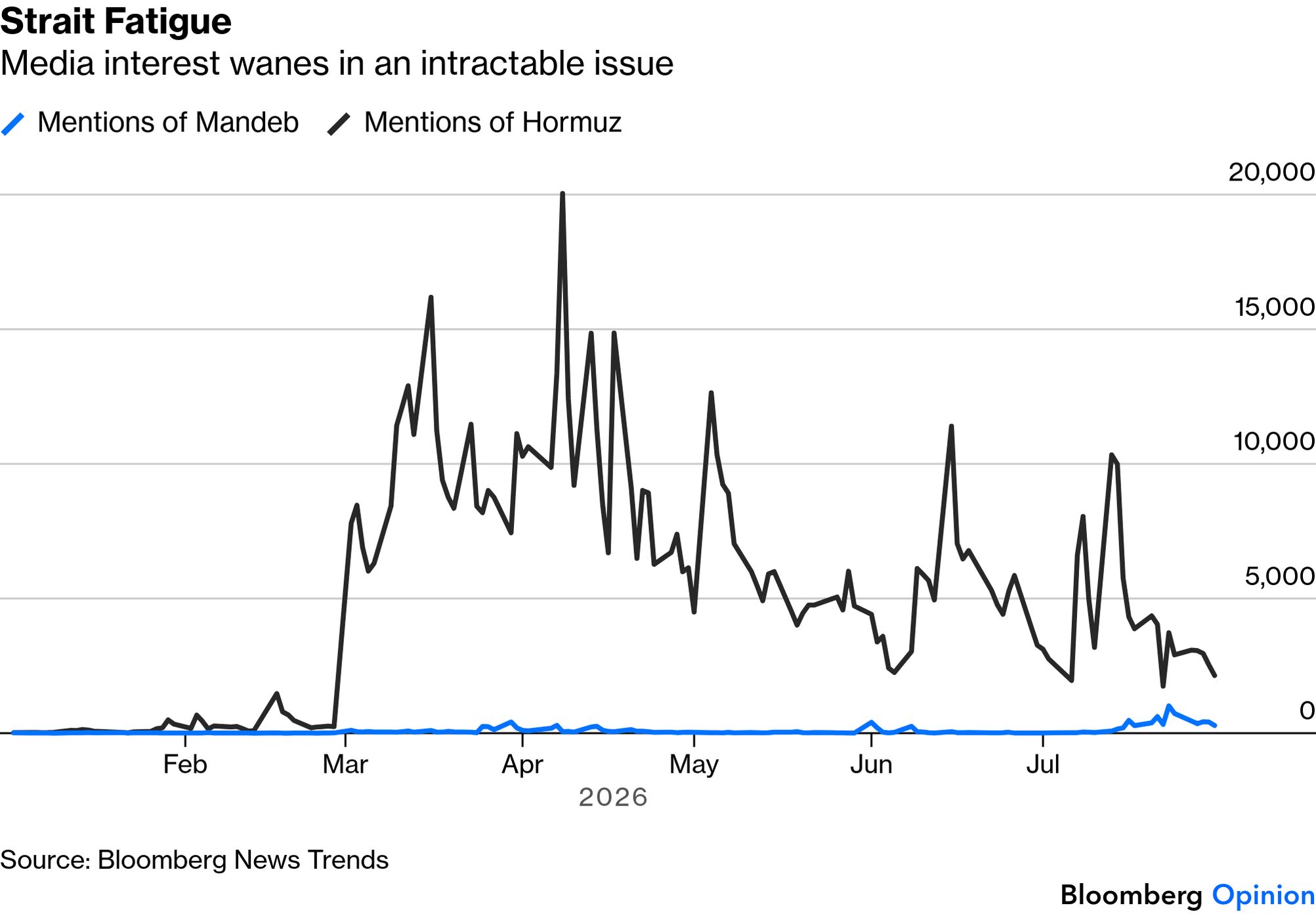
That helps the stock market rally. Then there is what might be called strait fatigue. After months of worrying about narrow necks of water in the Middle East, the global media is losing interest, and so the situation creates less of a lead weight on investors’ sentiment. Judging by the number of stories from all sources appearing on the Bloomberg terminal, interest is as low as it has been since the war started:
Put all of this together, and the oil price can tumble and liberate stocks to set new records.