

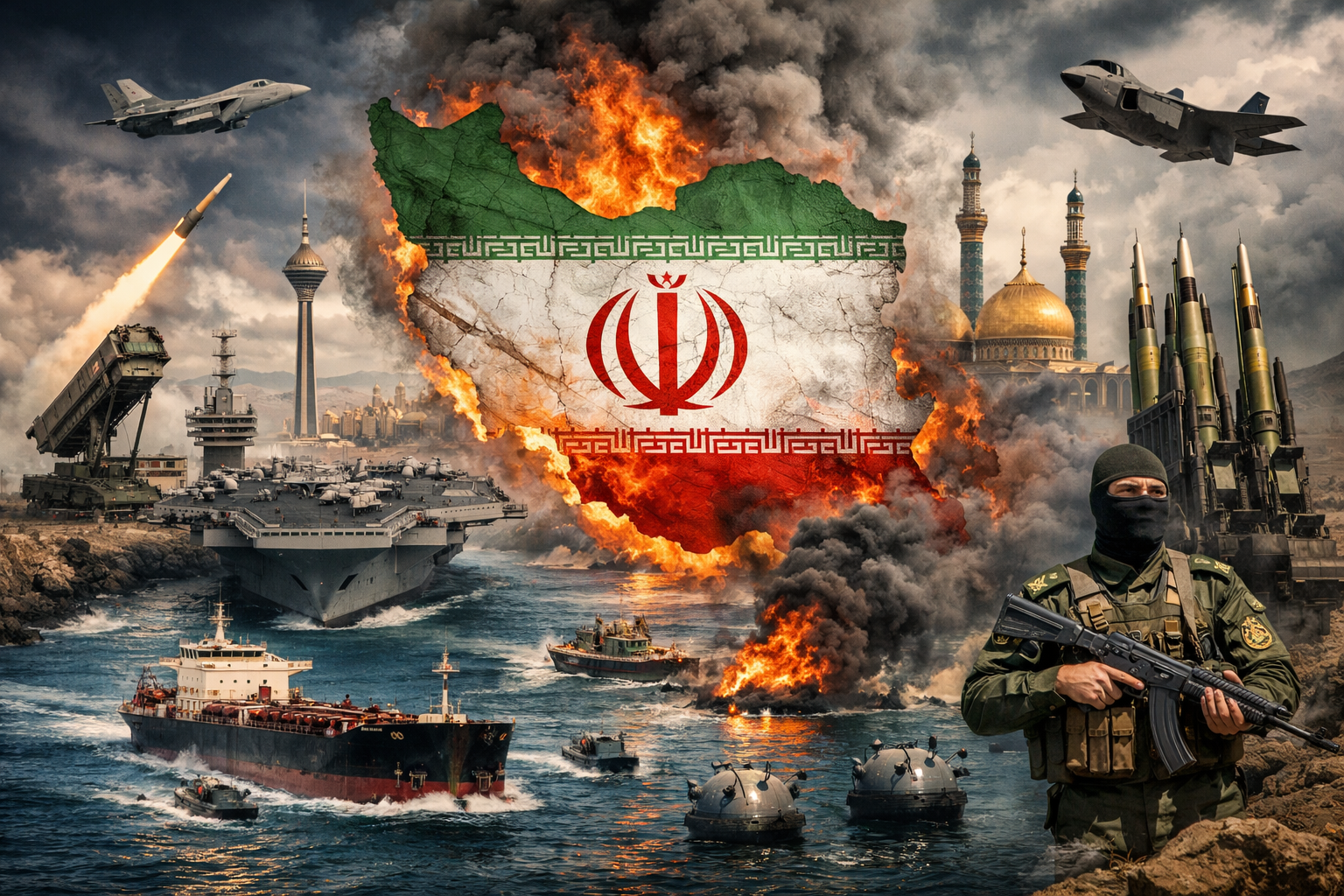
Uddrag fra FTs Authers:
the key question can now be boiled down to this: Can the conflict be wound down in a way that allows oil and other exports to start flowing through the Strait of Hormuz quite quickly? This is what matters financially, but it also handily allows some clear view of the motivations on either side.
President Donald Trump’s war aims have been confused and shifting, but he plainly doesn’t want a protracted interruption to oil supply (or a long war). The effect would be politically toxic and might well lose both chambers of Congress for the Republicans at the midterm elections in November. But last year’s much-discussed National Security Strategy made it a core aim that “the Straits of Hormuz remain open”; this is something that has to be done.
Shutting the Strait is bad for Iran as well, or course. But it is their critical source of leverage (rather like China’s control of rare earths in negotiations over US tariffs). They have abundant desire not to surrender, or their regime might not survive. That means closing the Strait.
We’ve also established that the Strait is even easier to close than had been thought. Insurance underwriters have determined that. Post-pandemic, we all know more about supply chains, so everyone understands the significance of Gulf nations already reaching capacity in their storage.
Markets are evidently caught in dire straits — the spike to $120 crude happened after a weekend of reports that the vulnerable passage between Iran and Oman had closed, while the brief drop as low as $80 followed a quickly withdrawn report that a US Navy ship had already escorted a ship through. This is at least strong circumstantial evidence that the issue matters above all others.
This is a problem. What is now universally known as the TACO option — Trump always “chickens out,” claims he won, and then moves on (which worked in the contretemps over Greenland) — isn’t available. He can declare victory, but it will only be a real win for financial markets if the Strait reopens. Iran’s increasingly assertive demands make it very unlikely they’ll do him this favor.
In a tour de force, the Egan-Jones ratings group (which has produced much pro-Trump commentary in recent weeks) used Sun Tzu, Machiavelli and Muhammad Ali to argue that the US has a problem. They fear that low-cost, decentralized drones, missiles, and intelligence networks make it far cheaper for a country to avoid defeat, even against a force as powerful as the US Navy:
Using Sun Tzu’s “The Art of War” as a guide, a clever way to defeat a stronger opponent is to make waging war far more costly for your opponent than it is for yourself. It appears that this is exactly the current situation.
Ali’s rope-a-dope approach to beating George Foreman, absorbing what his more powerful opponent had to offer until exhausting him, echoed successful anti-American insurgencies in Vietnam and later Iraq, and could have a modern analogue in using pesky drones and mines to shut off oil supply long after US appetite for bombardment is sated.
The west can play for time, because it has strategic reserves put aside for just such a situation as this, but Wednesday’s news that the International Energy Authority would release 400 million barrels of oil didn’t avert a fresh rise in prices. Marc Chandler of Bannockburn Global Forex cites reports that the Hormuz obstruction is reducing supply by between 11 million and 16 million barrels a day.
If the higher estimate is true, then a back-of-the-envelope calculation shows that the released reserves can plug the gap for 25 days. For what it’s worth, the Polymarket prediction market now offers a 52% probability that war will still be going on by April 30, which is 50 days from now.
A further problem is that reopening the Strait requires an Iranian regime that wants to do so, and has the strength to clamp down on rogue actors within. There is no sign of such a regime, even after the spectacular decapitation strikes that launched the offensive. Egan-Jones shows that none of Machiavelli’s five rules for successful regime change has yet been completed (while the US badly wants not even to try to implement some of them):
- Eliminate the Former Ruling Family
- Maintain Existing Laws and Taxes (When Possible)
- Establish Colonies Instead of Large Occupation Armies
- Live There Personally or Maintain Close Control
- Crush Rebellions Quickly and Decisively
A lesson from Covid, and the Ukraine war, is that supply chains will eventually adjust after a shock. Plans to keep trade flowing without going through the Persian bottleneck are already taking shape. But that takes time. For the next matter of months, it looks as though Hormuz will be closed, and that will hurt.
That is how it looks from 40,000 feet. And judging by a bad risk-off day on markets, investors are seeing it that way, too.