fra SEB
Escalated trade war with high geopolitical stakes
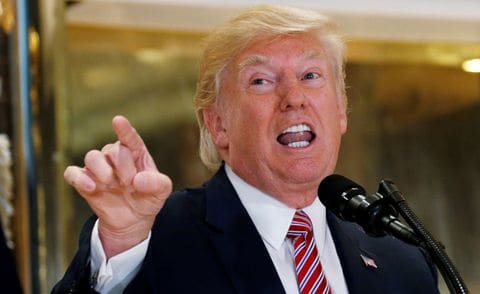
Trump’s trade tariffs – with Greenland as a “geopolitical factor”: thoughts. The stakes and risk levels have increased dramatically as eight countries, but in practice the entire EU, risk receiving punitive tariffs of 10% from 1 February (and 25% from 1 June). According to Trump, the tariffs will apply “until a complete and total purchase of Greenland is completed.” This gives us a completely new and escalated trade war situation, with geopolitical undertones. Tariffs are Trump’s multi-tool to achieve various purposes, not just related to trade. Trump’s territorial claim to Greenland cannot possibly be accepted by the EU, Europe or NATO. US support for Ukraine is also at stake. Europe’s verbal response has been harsh and clear. Higher tariffs from the US and Europe are a destructive way forward. The question is what will be the next step: export restrictions that cause disruptions in production chains? Now it is important to keep a cool head, not to be evasive but to take advantage of the time window that exists. In addition, we can hope that US congressional politicians will raise their voices against the fact that the US is now moving away from alliances and NATO. On Thursday, the EU heads of state and government will hold an emergency meeting; According to reports, the EU is preparing tariffs against the US of EUR 93 billion that can be implemented on 6 February. Read more about our thoughts on the situation in two new SEB reports: “Looming trade war between the US and EU” and “FX: recovery regime with geopolitical minefield (Greenland)“.
Negative stock market reaction welcome – conclusions. US stock markets closed close to zero on Friday despite Trump’s new move. Trump has shown in 2025 that he is not tone-deaf to negative market effects – they usually lead the White House to tone down its rhetoric and take a step back. Today, the US stock markets are closed due to a public holiday. Stock markets in Asia early Monday are being squeezed by the tariff war at the same time as the price of gold is rising (see table below). US Treasury yields rose by 6 basis points on Friday to 4.22%, after Trump indicated that he would like to keep Fed candidate and “superdove” Kevin Hassett in the White House.
Turbulent, serious and system-impacting 365 days: reflections. Tomorrow it will be exactly one year since President Trump gave his inauguration speech, with the worrying words: “The United States will grow geographically”. Now we begin to understand the meaning of the words. The events of early 2026 – around Greenland and Venezuela, among others – are best described as a systemic geopolitical “tipping point” that seriously weakens Europe’s (including Ukraine’s) position vis-à-vis the United States, Russia and China. At the same time, the dismantling of the rules-based international order is building up systemic crises in anticipation of a new order that no one knows how it will emerge. We must think the unthinkable and count on predictable unpredictability. In this complex state, the world is – so far – showing economic resilience. Thus, it makes short term sense for the stock markets to set new top records with the help of extensive investments in everything from defence, security and infrastructure to technology and energy transition.
The IMF delivers consensus – reflections. Today at 10.30 a.m., the IMF will release an update on its forecasts. Expectations of “fireworks” should be low. A marginal upward adjustment of the growth picture is in the cards. When IMF’s Georgieva visited Kyiv last week, she even hinted at some upside risks in the growth picture. It has been a long time since we heard these words, but it remains to be seen how the IMF will possibly correct the picture in the light of developments over the last few days.
China’s economy is running like clockwork – with clockwork problems. New data shows GDP growth for 2025 of 5.0% – fully in line with Beijing’s GDP target of “around 5%”. China continues to invest strategically in a comprehensive industrial policy of around 4% of GDP, and self-sufficiency. Domestic demand is oxygen-poor. This means that China sends the production surplus to Europe, for example. This leads to a continued growing and unsustainable imbalance between the EU and China in particular, and price and profitability pressures for European industry.
Nordic key stories
The Swedish government and the Riksbank signal growth optimism – conclusions. The economic stars seem to be right for the government in the election year 2026. However, it remains to be seen whether it will be enough to win the election on September 13. Reality, as we know, can change quickly and overnight. “Sweden is very, very stable despite turbulence” was otherwise the Finance Minister’s message on Friday (in Swedish). She repeated that message also yesterday. In another interview, the Governor of the Riksbank noted “the cynicism that it [Venezuela, Iran and Ukraine] does not matter that much, even though it is very tragic, human lives are lost”. There is no doubt that Swedish households’ economic space (in purchasing power) will be significant in 2026–2027, but there is uncertainty about the optimal level for households’ savings buffer. The fact that the “economic image of Sweden” is now really positive is confirmed by questions from foreign media and customers. In addition, the inflation situation is favourable, even compared with other countries. The fact that the government and the Riksbank seem to be competing over who has defeated the spectre of inflation is something we can live with, even if you should put a penny on the fact that both external factors and normalisation have also played a decisive role 😊.