
by Michael Ball, Bloomberg macro strategist,
The oil market will have to acknowledge that Hormuz is no longer just a price shock. It’s increasingly a physical-balances problem, with missing barrels likely to curtail real economic activity unless normal flows resume.
There are four buffers holding the system together:
- US crude and product exports rising,
- emergency stockpile releases,
- weaker Chinese crude demand and,
- rerouting through non-Hormuz supply chains.
They’re working, but each has its own limits.
Wednesday’s US inventory data showed the system is being hit at both ends.
Commercial crude inventories fell more than expected, the SPR draw was unusually large, Middle East imports dropped, and the US is leaning on alternative barrels such as Venezuelan crude to keep the system balanced.
At the other end, exports and refinery activity ramped up. US crude exports jumped back toward the upper end of recent history, refinery runs bounced as maintenance ended and jet fuel production reached its highest since July 2024.

h/t Grant Smith and Yongchang Chin
IEA countries have released about 164 million barrels from emergency stockpiles as of May 8 since the Iran war began.
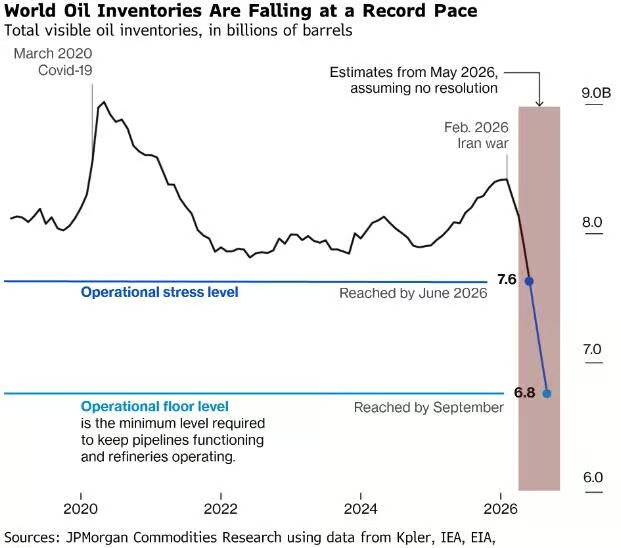
Capital Economics warned in a recent note that OECD commercial inventories, which are falling at a record pace, could reach critically low levels by end-June if April’s draw pace persists.
China has also been a quiet relief valve.
Its crude imports fell sharply in April as refiners cut runs and stockpiling slowed, reducing competition for scarce barrels.
However, economic activity is running hotter there and inventory drawdowns will also eventually have limits.