
Resume af teksten:
Referatet fra det seneste møde i Den Europæiske Centralbank (ECB) viser tilfredshed med den nuværende rente, på trods af stigende usikkerhed. Diskussioner fokuserer på risikoen for både inflationsstigning og -undergang, især grundet globale udviklinger som krigen i Mellemøsten, der har ændret udsigterne betydeligt. ECB bemærkede en potentiel stigning i den neutrale rente, hvilket afspejler mere ekspansiv finanspolitik og mulig produktivitetsforbedring fra kunstig intelligens. Bekymringer om vækst og stigende usikkerhed blev fremhævet. Traditionelt ser ECB igennem oliedrevne inflationsstigninger, men den længerevarende konflikt i Mellemøsten kunne skubbe banken til en mere aggressiv pengepolitik, selv om renteforhøjelser endnu ikke er på dagsordenen.
Fra ING:
The just-released minutes of the ECB’s last policy meeting in February showed the central bank to be broadly satisfied with the current monetary policy stance, despite increasing uncertainty
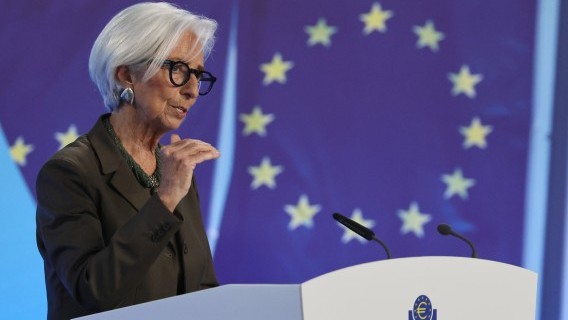
When talking about monetary policy these days, there is a risk of sounding like grandparents who talk about the past and make distinctions between before and after the war. Where the European Central Bank is concerned, however, the distinction between before and after the war in the Middle East currently presents a clear change to the outlook for monetary policy.
Back at the last meeting, the discussion was rather about a potential inflation undershooting; if nothing changes, it will instead shift to a possible inflation overshooting at the next meeting two weeks from now.
The minutes of the ECB’s February meeting reflect a broad discussion with clearly diverging views, particularly about the inflation outlook or risks to the inflation outlook. In summary, ECB members seem to agree on higher uncertainty stemming from global developments, but a relatively resilient economy and – for the time being – a relatively stable inflation outlook. The central bank’s famous ‘good place’ was mentioned three times, and it is obvious that at least a few of its members had started to contemplate rate cuts further down the line, stressing the symmetry of the ECB’s inflation target.
On a different note, there was an interesting discussion on the neutral interest rate, which some ECB members seemingly see as having increased again. But with everything going on in the Middle East, this is a discussion that will not gain more momentum imminently.
Highlights from the minutes:
Downside risks to growth. “At the same time, several concerns were raised about the growth outlook, and it was observed that the latest Survey of Monetary Analysts suggested that risks to growth were increasingly veering to the downside.”
Increased uncertainty. “Against this background, members assessed that the euro area continued to face a volatile global policy environment. A renewed increase in uncertainty could weigh on demand.”
Not only regarding growth, but also inflation. “Against this background, members assessed that the outlook for inflation continued to be more uncertain than usual on account of the volatile global policy environment.”
Interesting remarks regarding the neutral interest rate. “In this context, it was suggested that the range of estimates of the nominal natural rate of interest had shifted up. It was argued that this was in line with a more expansionary fiscal policy and a potential productivity boost from artificial intelligence. It was noted that, if this trend were to continue, current policy rates could become increasingly accommodative.”
Symmetry of inflation target. “It was also seen as vital to reiterate that the Governing Council’s target was fully symmetric over the medium term.”
War in Middle East takes rate cuts off the table
Looking ahead, the macro backdrop will have substantially changed when the ECB meets again in two weeks. With the war in the Middle East, the risk of inflation undershooting and consequently a debate on further rate cuts should definitely be off the table. Gone is a scenario in which a stronger euro could push down the ECB’s own inflation forecasts for longer, leading to a more controversial debate on inflation undershooting and what it would mean for the ECB’s credibility.
Oil prices had already started to increase and the start of the war in the Middle East has probably coincided with the cut-off date for the latest forecast round. The latest market movements – a weaker euro and higher oil prices – would lead to higher inflation in the eurozone going forward. The big question for the ECB is, therefore, no longer how to react to an inflation undershooting but rather how to react to another oil price shock.
Traditionally, oil price shocks tend to be stagflationary for the eurozone, which often motivated the ECB to simply look through oil-driven inflation surges. However, the risk of such an approach is falling behind the curve, as could be witnessed in 2022. Admittedly, this is not yet a 2022 environment as it is mainly a price shock and not also a supply shock; Europe doesn’t have to ‘derisk’ from a single energy provider. The labour market also isn’t as strong as it was in 2022, with structural transitions and additional wage increases rather unlikely, and governments more hesitant to provide new fiscal stimulus.
In any case, the longer the war in the Middle East lasts, and the longer energy prices remain at elevated levels, the more memories of 2022 will return for the ECB. If this is the case, the ECB would definitely turn more hawkish again – even if rate hikes would currently be one step too far.
Hurtige nyheder er stadig i beta-fasen, og fejl kan derfor forekomme.