Resume af teksten:
Tysklands ‘Superwahljahr’ i 2026 byder på flere regionale valg, der vil teste forbundskansler Friedrich Merz og hans regerings evne til at holde sammen. Med valg i Baden-Württemberg, Rheinland-Pfalz, Sachsen-Anhalt, Berlin og Mecklenburg-Vorpommern samt kommunale valg i andre stater, kan resultatet ændre den politiske dynamik. Særligt fokus er på AfD, der står stærkt i meningsmålingerne i flere stater, og kan få stor indflydelse, især i Sachsen-Anhalt, hvor de måske vil opnå deres første Ministerpræsident. CDU’s resultater i disse valg vil påvirke Merz’s styrke i Bundesrat, Tysklands øverste kammer, og kan potentielt bremse eller fremme deres reformdagsorden. Baden-Württemberg, hvor CDU håber at genvinde magten fra De Grønne, er særlig vigtig som en tidlig indikator på Merz’s succes. Valgene vil også være et pejlemærke for SPD’s fremtid og chancer for overlevelse som koalitionspartner.
Fra ING:
From Baden-Württemberg’s industrial heartland to Saxony-Anhalt’s AfD reckoning, 2026 is a test of whether Berlin’s grand coalition can survive the year it promised to deliver
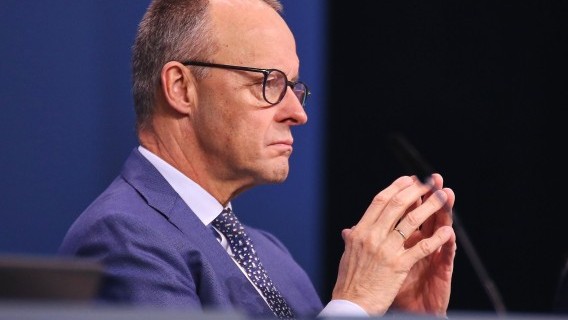
German Chancellor Friedrich Merz
Every four years, the United States has its ‘Super Tuesday’; the day when most states have their primary elections in the presidential race. Every few years, Germany has its very own ‘Super Election year’; a year in which several regional state elections are not only a test case for the federal government but can also reshape the political landscape. Next week, the state elections in Baden-Württemberg on 8 March will kick off an election year with five state elections. Rhineland-Palatinate will be the second on 22 March, followed by Saxony-Anhalt, Berlin and Mecklenburg-Vorpommern in September. Last but not least, there will be three municipal elections as well this year: in Bavaria, Hesse, and Lower Saxony. Speaking from historical experience, the outcomes of these regional elections are always driven by a mix of federal/national factors and figures but also by local or regional circumstances. Sometimes one is more relevant than the other, and vice versa.
However, one thing is for sure – this year the elections will be seen as a first test case for Chancellor Friedrich Merz and the popularity of his government, but also the stability of the coalition going forward. It will serve as a test case for the Alternative for Germany party (AfD) as the elections in the autumn, in particular, could lead to the first ever AfD Minister-President in a German state. But there is more: state governments appoint members to the Bundesrat, the upper chamber of parliament, which has a say in major legislation. A federal government led by the Christian Democratic Union (CDU) facing Bundesrat opposition from left-leaning state coalitions could find its reform agenda slowing to a crawl. Conversely, a string of CDU gains in the Länder would not only strengthen Merz’s hand in the upper chamber but send a powerful political signal that his government’s programme enjoys popular support outside the Berlin bubble.
A problem in Germany (or, for that matter, all of Europe) is that there is no synchronised election calendar. With 16 regional states, the next important election is never far away, often affecting national politics and particularly strategic decision-taking, with implications even at the European level. Just think back to the Greek crisis when the decision on a bail-out was postponed until after elections in the German state Northrhine-Westfalia. In times when the economic business model of the entire country needs an overhaul, the conflict between short-term orientation in regional elections and long-term reforms becomes a real problem.
The five elections
Baden-Württemberg, 8 March. The opener and, for now, the most closely watched. The CDU wants to reclaim the Minister-President position for the first time since 2011. We’ll also be watching the results for the AfD in one of Germany’s most important economic powerhouses, a state that is currently feeling the pain of industrial transformation more acutely than almost anywhere else. More on this below.
Rhineland-Palatinate, 22 March. The Social Democratic Party (SPD) has governed here continuously since 1991. Losing this state, where Helmut Kohl once ruled for the CDU, would be a substantial blow to an already struggling junior coalition partner to Friedrich Merz and could push the party into an existential crisis that reverberates back to Berlin.
Sachsen-Anhalt, 6 September. This is where the AfD question becomes acute. The party is polling at 38-40%, ahead of any combination of other parties that could credibly govern. The CDU has held the premiership here since 2002, but forming a majority without the AfD is, according to current polls, only possible with a mathematically fragile multi-party arrangement. The firewall, the CDU’s stated refusal to govern with the AfD, faces its most serious test here. If the firewall holds and a patchwork coalition stumbles, the AfD draws exactly the lesson it wants: that the mainstream parties’ unwillingness to work with it is the problem. If the firewall cracks, Germany’s political landscape shifts permanently.
Berlin, 20 September. CDU incumbent Kai Wegner has governed with the SPD since 2023 in a coalition that is functional but not inspiring. His recent handling of the power outage and winter weather chaos has not helped. Berlin is an unusual battlefield where the Left, Greens, SPD and AfD all compete in relatively close proximity, and the result could produce a governing coalition that looks nothing like what anyone in Berlin’s federal government would prefer.
Mecklenburg-Vorpommern, 20 September. Another eastern state, another AfD stronghold. Manuela Schwesig’s SPD has governed here since the late 1990s, but the AfD is polling as the clear frontrunner at around 30-35%. Schwesig is popular personally, which may soften the blow, but coalition mathematics here too are deeply uncomfortable. A second SPD defeat on the same evening as Berlin would be a brutal night for Merz’s junior coalition partner.
Focus on Baden-Württemberg
Baden-Württemberg is not a typical German state. With nearly 11 million inhabitants, it is Germany’s third-largest by population and one of its most economically significant. Home to Mercedes-Benz, Porsche, Bosch, Trumpf and SAP, it was long the benchmark for what industrial policy can achieve when it works.
The past tense is deliberate. The state economy contracted 0.4% in 2024, performing worse than even the weak national average. Household-name companies are recording losses and are announcing job cuts. Some have brought parallels with the Ruhr Valley. What coal and steel were to that region, the combustion engine could be to Baden-Württemberg. The Ruhr’s decline took decades, was subsidised at enormous cost, and never fully resolved. The warning is not that transformation is impossible, but that it can be fatally delayed by political timidity.
The state has been governed by the Greens since 2011, when Winfried Kretschmann became Germany’s first and only Green Minister-President. He won elections largely on personal trust that transcended his party. He is not running again, and with him goes the electoral magic that kept the Greens ahead of the CDU in a state that is, by temperament and tradition, conservative.
The CDU’s Manuel Hagel, 35, is currently the frontrunner. Already his party’s youngest ever state Fraktion chair, he has assembled a visible alliance with Bavaria’s Markus Söder and Hesse’s Boris Rhein to signal mainstream Union credentials. His platform centres on deregulation, affordable energy and support for industry, well-suited to Baden-Württemberg’s mood.
The Greens’ Cem Özdemir, former federal agriculture minister, born in Bad Urach to Turkish immigrant parents and one of Germany’s most recognisable politicians, is the more intriguing candidate. He is running as a pragmatist, deliberately distancing himself from the prescriptive, regulation-heavy image that has become the Greens’ electoral liability. His personal approval rating, at 39% for Minister-President, dwarfs Hagel’s 18%. The problem is that personal popularity does not automatically transfer into party support. The latest polls put the CDU at 28%, the Greens at 22%, and the AfD at 20%, double its 2021 result of 9.7%.
What is at stake for Friedrich Merz
Merz came to the chancellorship with a mandate and a compliant coalition partner. One year on, Germany has seen an enormous U-turn on fiscal policy but only tentative signs of structural reform. The promised breakthrough on reforms regarding welfare costs, competitiveness or the structural fiscal gap beyond the special purpose vehicle for defence and infrastructure has not arrived.
The March elections are the early warning system. A CDU victory in Baden-Württemberg would be a significant symbolic win. A narrow loss, or a result that leaves the CDU as the junior partner, would be the first signal that expectations have run ahead of delivery. For the SPD, Rhineland-Palatinate is existential in the way that Baden-Württemberg is for the CDU.
There is also the Bundesrat dimension that matters beyond the headlines. State governments appoint members to Germany’s upper chamber, which has a say in major federal legislation. A string of CDU gains would strengthen Merz’s hand in the Bundesrat and his legislative room for manoeuvre. A string of losses would constrain it at precisely the moment when his government needs to push through reforms that require cross-chamber support.
The September elections are a different order of challenge. Here the question is not whether Merz’s CDU wins, but whether it can prevent the AfD from crossing the threshold that makes a stable coalition government impossible. Every time the firewall holds under pressure, Merz’s authority within his own party is reinforced. Every time it looks like it might crack, the AfD has its argument handed to it: that the mainstream parties’ refusal to engage with it is leading to governmental dysfunction rather than solving it.
Super election year will determine how much reform effort to still expect from Merz
Germany’s Superwahljahr – a year of multiple elections – is not just a test of Merz’s popularity. It is a test of whether the political mainstream can still govern effectively enough that voters see a reason to stay within it. The last German leader with the courage to push through painful structural reform was Gerhard Schröder. His reforms outlasted him. His successors have largely avoided his fate by also avoiding his ambition.
The moment to act is before the crisis looks irreversible, not after. Baden-Württemberg’s voters know this story well. On 8 March, they begin to write the next chapter. This is the first of five chapters this year that will also determine the pace of any new reform efforts.
Hurtige nyheder er stadig i beta-fasen, og fejl kan derfor forekomme.