

Fra Guardian
Italy’s prime minister Matteo Renzi told at a press conference in Brussels that there were moments during the marathon talks when he would have bet that negotiations would fail.
“But today instead we have taken a decisive stop forward.”
“At many moments, a deal could not be taken for granted. We should not toast triumphantly about it, nor should we diminish it,” he said, adding that there was still much work left to be done.
He denied that Germany “alone” was in charge of Europe. While he acknowledged that the Germans had a “different approach”, he said it was one he respected because it represented the will of a democratically elected government and that the overnight talks has been a “real discussion”.
Renzi also acknowledged that he supported keeping the fund that will hold Greek assets in Athens, not Luxembourg, saying that such a move would have been “a humiliation”.
[going into the talks, the Italian PM declared that he would tell Germany that “enough is enough”]
And he added that Italy’s moment of crisis – despite still having high debt levels – was behind it.
“Italy is part of the solution and not the problem.”
Updated
Just read the body language:
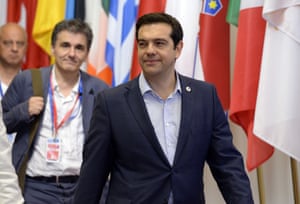
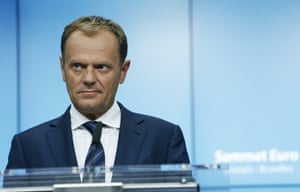
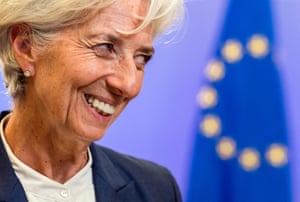
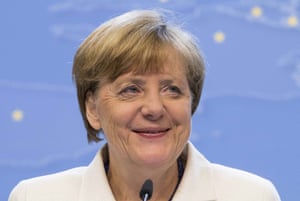
Updated
Alexis Tsipras has even agreed to consider reversing some of the measures his government has taken this year:
Does that mean that the Athens cleaning ladies, who were famously rehired after protesting their dismissals, will be laid off again?
The new measures Greece must now implement
The final Euro Summit statement confirms that Greece has agreed to immediately implement sweeping measures, after a bruising battle in Brussels:
This includes pension reforms, liberalising its economy (from Sunday opening hours to opening up closed professions), privatising its energy transmission network, reforming its labour market practices (including new rules on industrial action, and collective dismissals), and action on non-performing loans:
That is on top of the austerity its MPs agreed on Friday:
Here are the key points:
- carry out ambitious pension reforms and specify policies to fully compensate for the fiscal impact of the Constitutional Court ruling on the 2012 pension reform and to implement the zero deficit clause or mutually agreeable alternative measures by October 2015;
- adopt more ambitious product market reforms with a clear timetable for implementation of all OECD toolkit I recommendations, including Sunday trade, sales periods, pharmacy ownership, milk and bakeries, except over-the-counter pharmaceutical products, which will be implemented in a next step, as well as for the opening of macro-critical closed professions (e.g. ferry transportation). On the follow-up of the OECD toolkit-II, manufacturing needs to be included in the prior action;
- on energy markets, proceed with the privatisation of the electricity transmission network operator (ADMIE), unless replacement measures can be found that have equivalent effect on competition, as agreed by the Institutions;
- on labour markets, undertake rigorous reviews and modernisation of collective bargaining, industrial action and, in line with the relevant EU directive and best practice, collective dismissals, along the timetable and the approach agreed with the Institutions. On the basis of these reviews, labour market policies should be aligned with international and European best practices, and should not involve a return to past policy settings which are not compatible with the goals of promoting sustainable and inclusive growth;
- adopt the necessary steps to strengthen the financial sector, including decisive action on non-performing loans and measures to strengthen governance of the HFSF and the banks, in particular by eliminating any possibility for political interference especially in appointment processes.
And on top of that, Greece will also establish a new fund to sell off valuable assets to help repay its new bailout, and refinance its banks.
Or as the statement put it:
- develop a significantly scaled up privatisation programme with improved governance; valuable Greek assets will be transferred to an independent fund that will monetize the assets through privatisations and other means. The monetization of the assets will be one source to make the scheduled repayment of the new loan of ESM and generate over the life of the new loan a targeted total of €50bn of which €25bn will be used for the repayment of recapitalization of banks and other assets and 50% of every remaining euro (i.e. 50% of €25bn) will be used for decreasing the debt to GDP ratio and the remaining 50% will be used for investments.