



The 30-Year Itch
Uddrag fra Authers FT:
The summer doldrums continue. So does the inexorable rise in the longest-term government bond yields. Monday saw the yield on the 30-year US Treasury top 5.3% for the first time since the eve of the Global Financial Crisis in 2007, and that’s in line with global experience; Japanese 30-year yields have risen above 4% for the first time in their 27-year history, while equivalent UK gilts yield their highest since 1998:
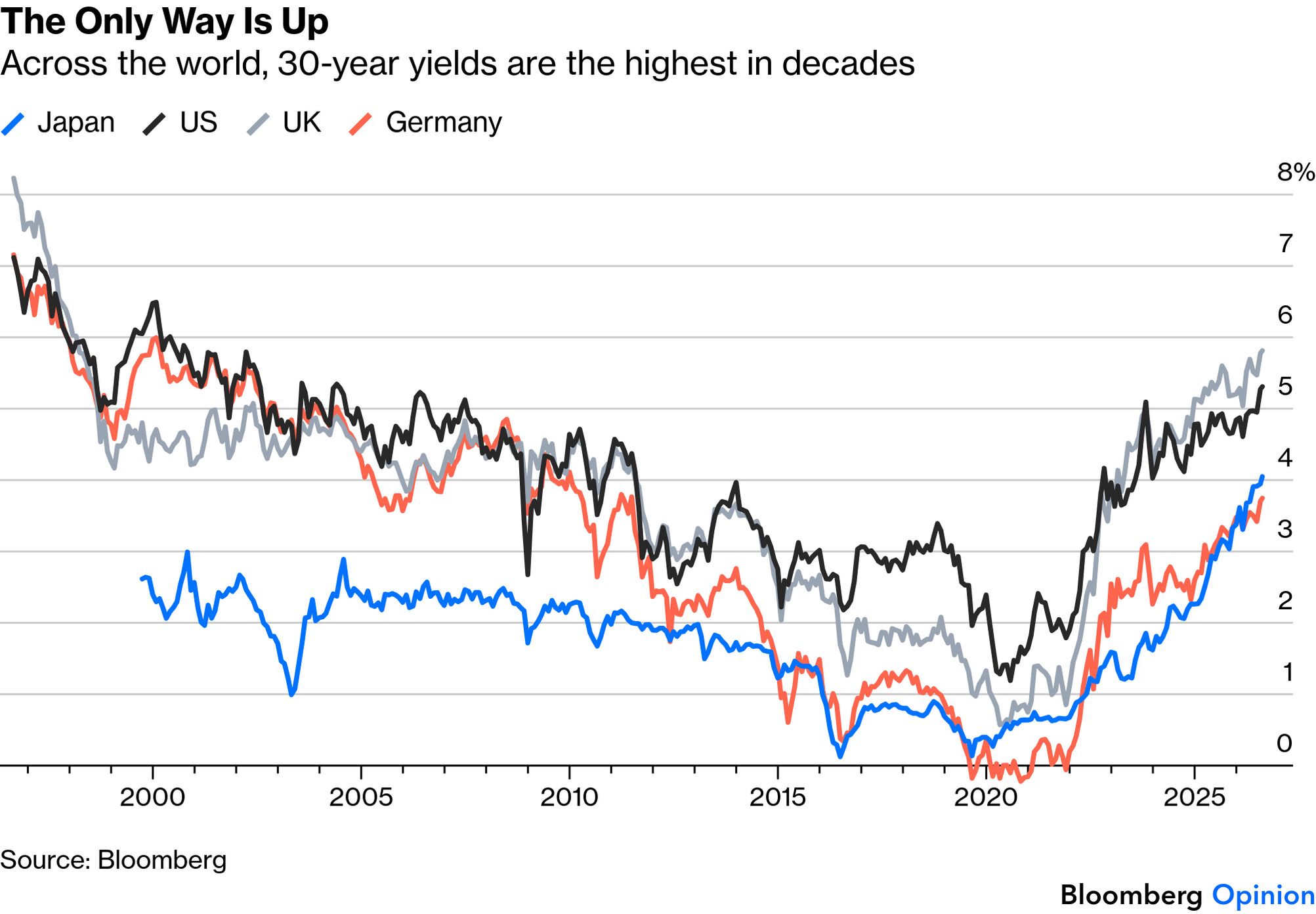
Generally, rising long bond yields signal concern that growth will drive inflation and require higher interest rates further down the line. Some recent strong regional manufacturing surveys in the US might just support such a narrative. It’s hard to attribute all of this move to inflation anxiety, however, as bond market inflation forecasts have remained low and stable.
Anshul Pradhan of Barclays argues that rather than inflation expectations, “three factors are at play: the budget deficit outlook, AI-related corporate issuance, and the changing Treasury buyer base.” With companies issuing huge amounts of debt to fund AI capex, long Treasuries have a new competitor that might force them to offer a stronger yield, while the growing budget deficit never goes away as an issue.
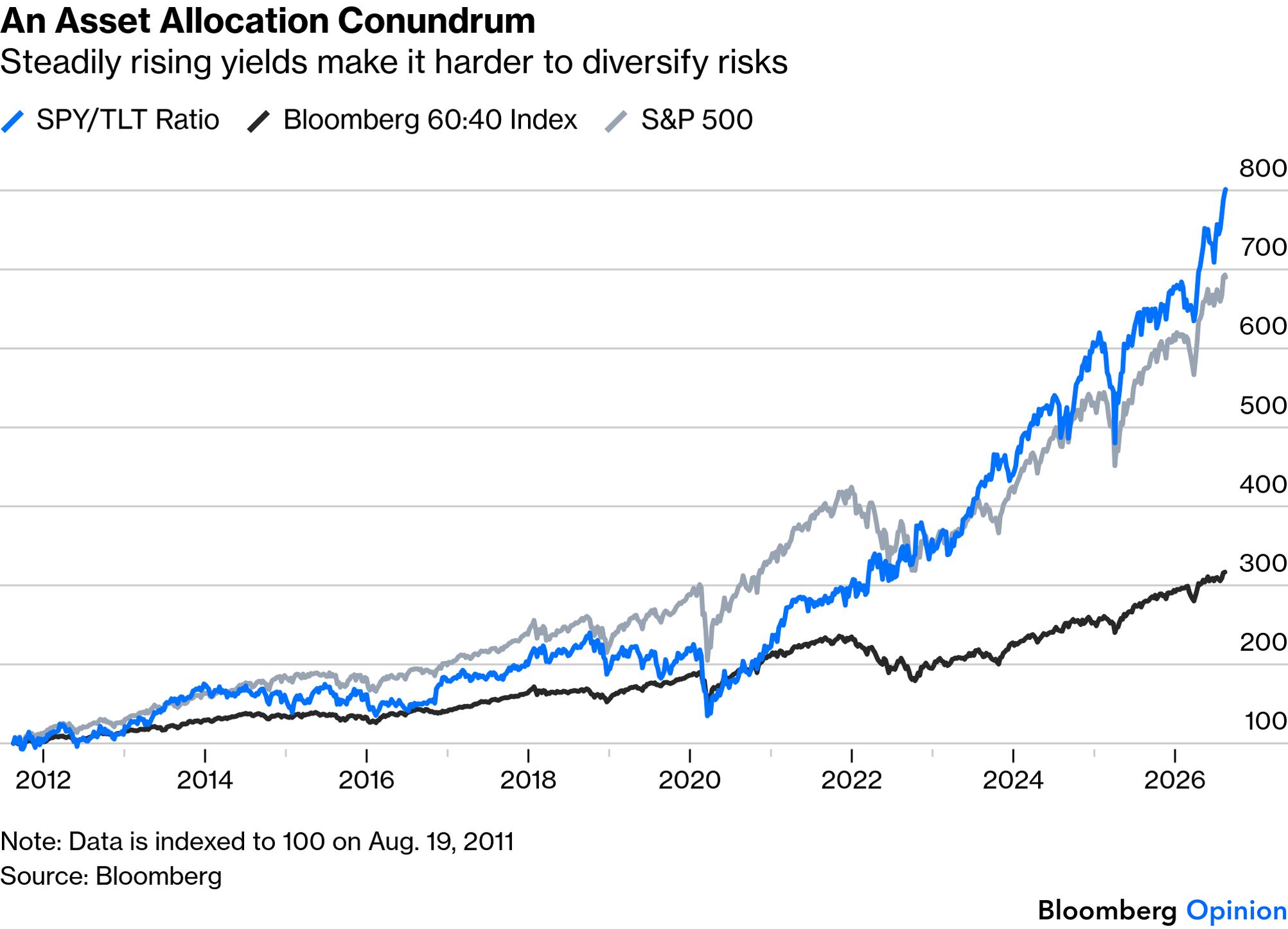
Steadily rising yields create an issue for asset allocators as bonds become less effective diversifiers in bad times for stocks. Since the worst of the pandemic, buying US stocks relative to Treasuries — proxied in the chart by the ratio between the main ETFs tracking the asset classes — has handily outperformed the S&P 500 itself, while a classic 60:40 portfolio (60% stocks and 40% bonds) has lagged badly:
This is most obviously bad news for the mortgage market. Higher 30-year yields obstruct hopes to bring down fixed mortgage rates. If it benefits anyone, Alexander Altmann of Barclays Equity Technical Strategies argues that it’s stocks with strong balance sheets that don’t need to do much borrowing, and which have been relatively out of favor:
If yields keep going up due to fiscal concerns, then investors will want to find some comfort in strong balance sheet businesses, especially when long end real yields are threatening the peak GFC levels. If yields go down as a function of a growth scare, then you’re shifting to a more defensive posture anyway.
Almost by definition, the long bond market moves slowly, but shifts of the tectonic plates can have a serious effect. If there’s any risk of a major quake to disturb the current calm, this is where it comes from.