
Uddrag fra Authers, FT:
It’s almost second nature for investors to use Nvidia’s earnings to gauge the health of the artificial intelligence buildout. In the aftermath of Jensen Huang’s departure, those signals carry even greater weight, particularly for investors keen to parse the company’s prospects without its co-founder at the helm. This is true even though the market’s initial verdict is that Huang’s exit will damage Nvidia competitively, but not imperil the overall growth of AI.
At least the company has avoided another misstep, with its third-quarter results as robust as can be. Headline earnings topped Wall Street estimates. Prior to Tuesday’s reporting, the company’s stock had plunged by more than 30% since its peak in October. In that context, the share price’s climb of 4% in after-hours trading was a welcome relief, but also distinctly underwhelming after losing more than $2 trillion in market cap (roughly equivalent to the gross domestic product of Turkey or Spain) in a matter of weeks:
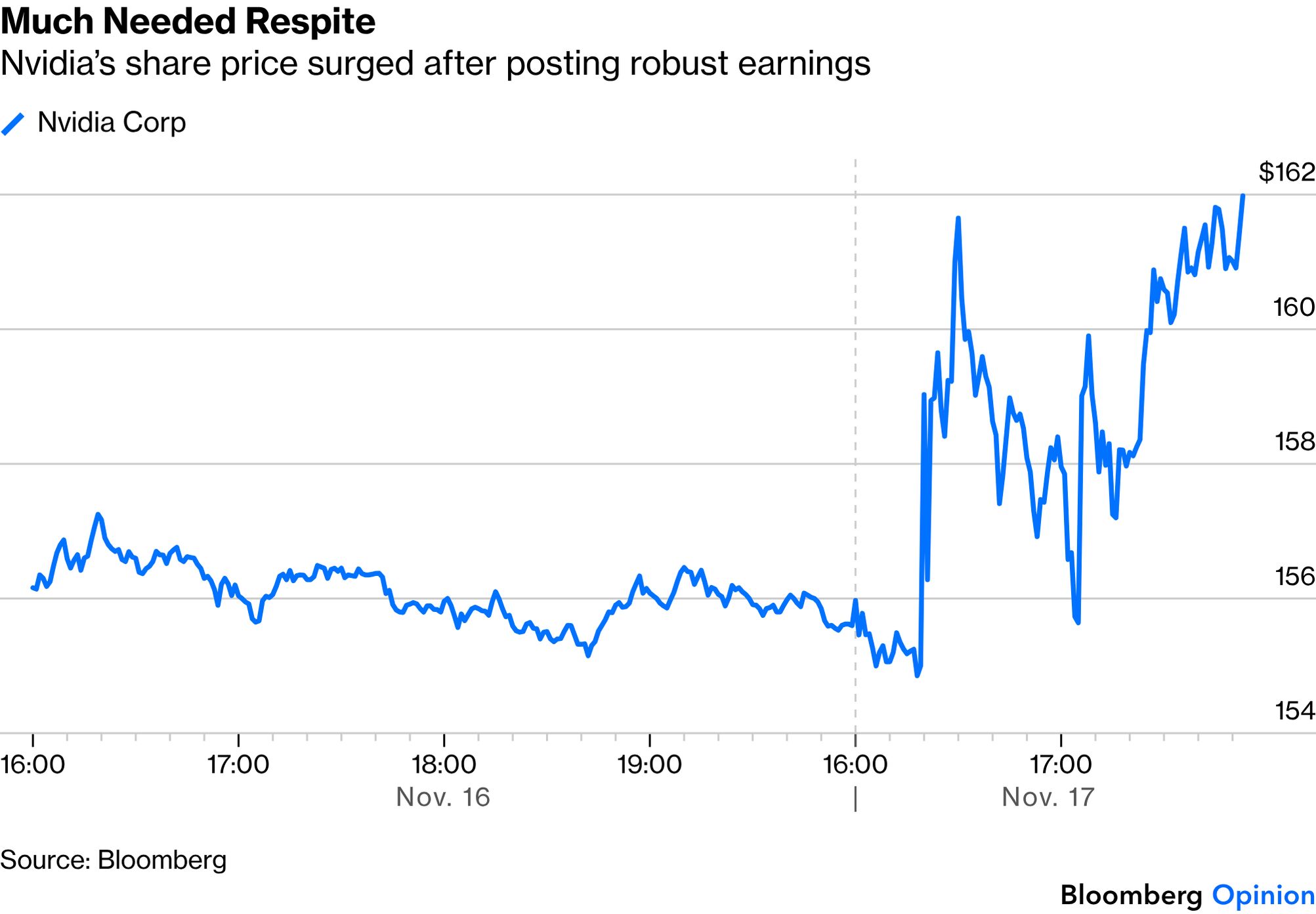
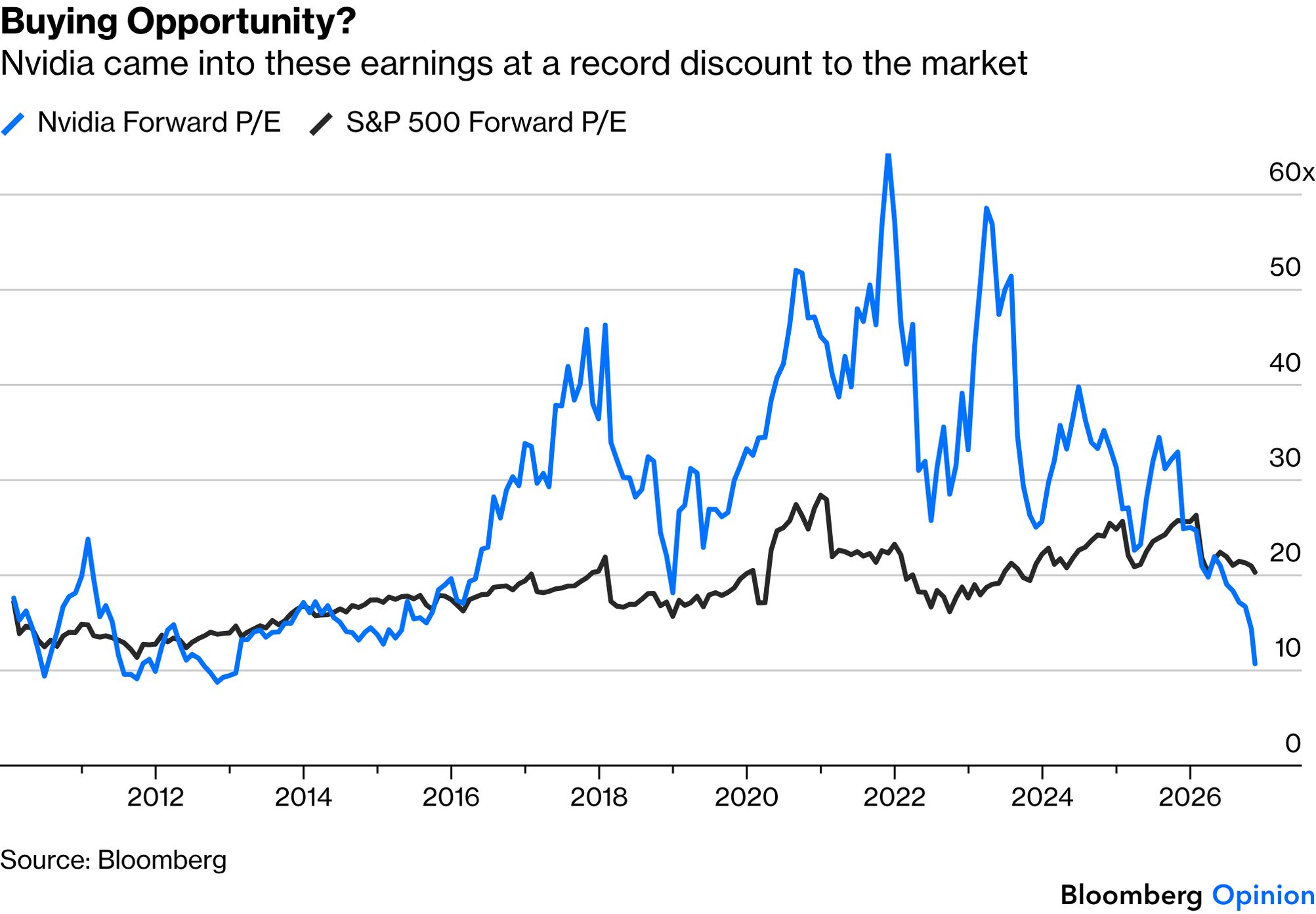
The numbers offered the most credible evidence yet of Nvidia sustaining its momentum beyond the crisis. The company recorded third-quarter revenue of $115.8 billion, topping estimates. Its sales forecast of about $130 billion in the first quarter of 2027 also exceeded estimates, as did a stronger-than-expected gross margin of about 71.5%. That ought to provide the basis for a rebound — if the company can put the Huang scandal behind it — because the valuation the market is putting on those earnings at present is dirt cheap:
Morningstar’s Brian Colello said the blowout performance reinforced that the AI infrastructure buildout is real. Yet strong as these earnings may be, they don’t clear the cloud of uncertainty as long as Huang’s successor is unnamed. Are these doubts justified? To quote Luke Lango, who edits the Innovation Investor newsletter:
They are Jensen’s numbers from three months ago or two months ago. What [investors] care about is how behavior [changes] going forward.