

Uddrag fra Goldman Sachs og en stribe andre finanshuse
A month ago the Fed’s next move hinged on the second decimal of core CPI. This time the bar is far lower, or at least the Fed is pretending it is.
Recall that in September the FOMC hiked rates for the first time since July 2023, just days after an August CPI report that showed the lowest core inflation since 2021 (which however sent rate-hike odds soaring as it came in just fractionally above the median estimate). Last week’s FOMC minutes showed all 19 officials backed that hike and that “most” see another one by year-end as appropriate.
But then the September payrolls report came in at a dismal 29K, wage growth slowed to 3.0% (the weakest since May 2021), and the Fed’s heavy hitters suddenly discovered the virtue of patience: Jefferson and Williams say there is time to assess the data, Waller wants more hikes but not at consecutive meetings, and Bowman sees no urgency at all. Williams added on Tuesday that one more hike this year is “likely” appropriate, with nothing further in 2027.
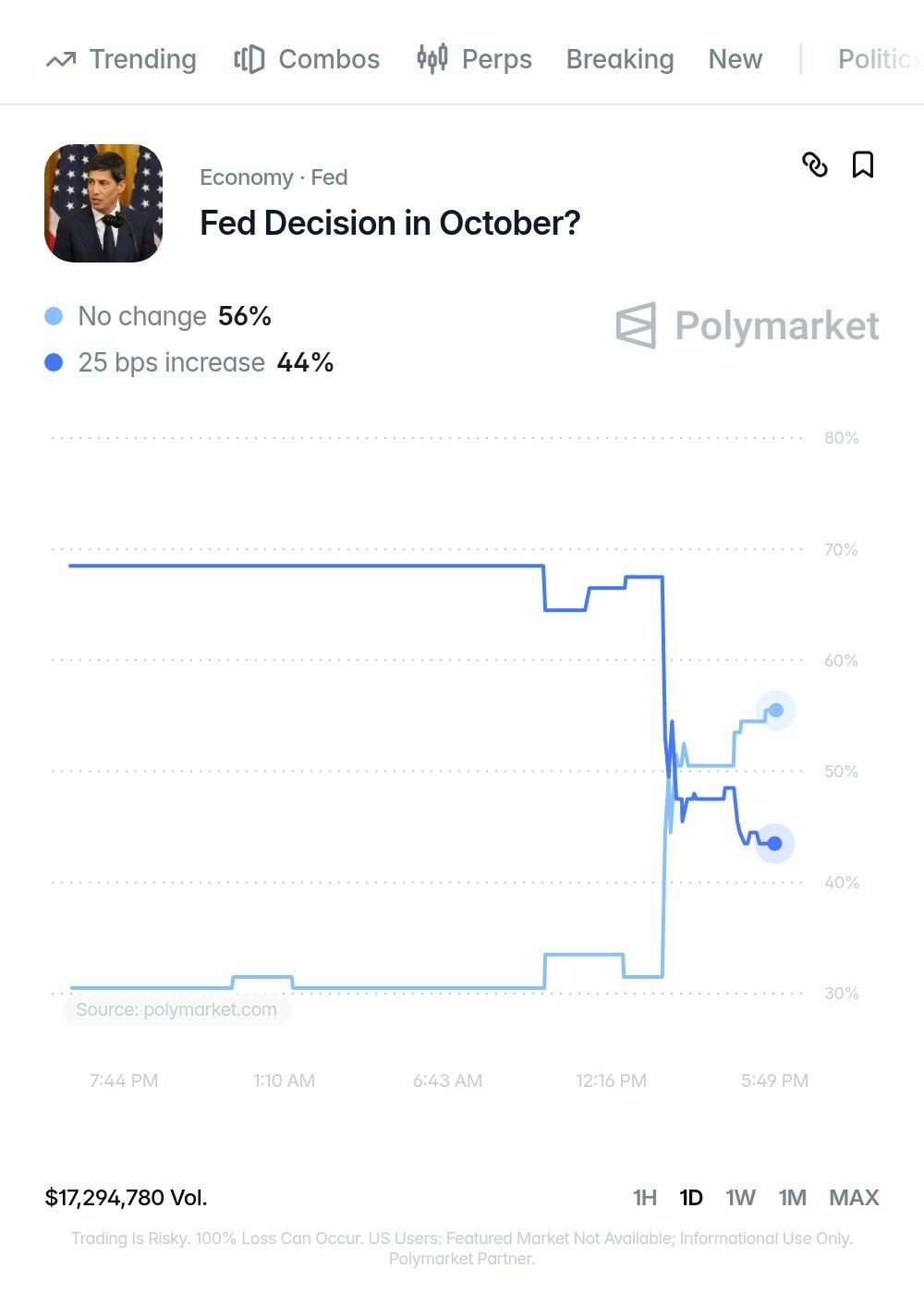
The result: market-implied odds of a 25bp October hike have collapsed to ~20% from ~70% before the jobs report, while December is still roughly 72% priced. The reversal started even before payrolls, when Williams said there was no “urgency” to act and October hike odds on Polymarket tumbled from 68% to 44% in a few hours:
Which brings us to Wednesday’s September CPI (8:30am ET), which will set the tone for both the Oct 28 and the December meetings. Thursday brings PPI (headline seen +0.5% M/M, core +0.3%), which analysts will use to refine their September core PCE estimates, and early Friday Chair Warsh speaks at the IMF in Bangkok, where traders will look for any hint of whether he shares his colleagues’ newfound patience. Warsh dislikes forward guidance, of course, which just means everyone will read his tea leaves even harder.
Expectations
- Headline CPI is expected to rise 0.6% M/M in September (prev. 0.4%), lifting the annual rate to 3.6% Y/Y (prev. 3.4%) as gasoline does the heavy lifting.
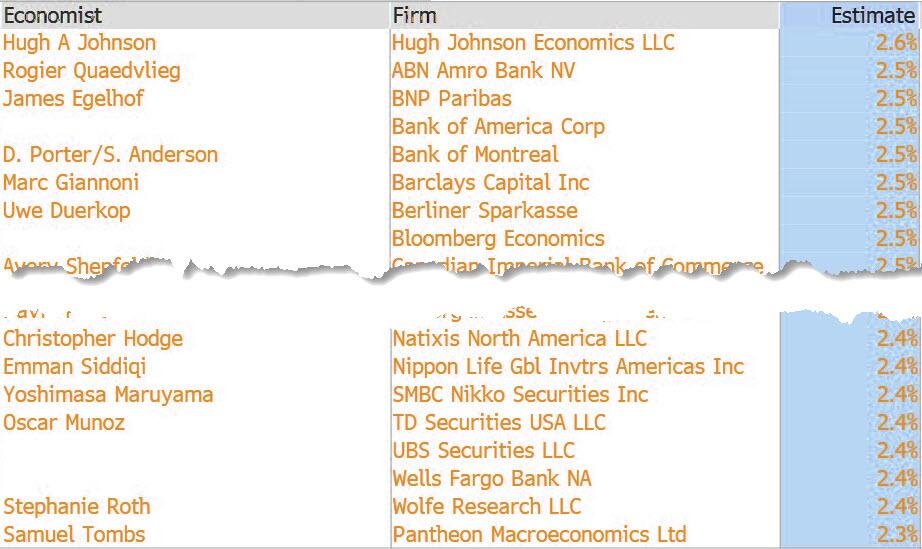
- Core CPI is expected to rise 0.2% M/M (prev. 0.3%), moderating from August’s reading, which was the fastest monthly pace in four months. The annual core rate is seen edging up to 2.5% Y/Y (prev. 2.4%), with analyst estimates raning from 2.6% for Hugh Johnson Economics to 2.3% for Pantheon Macro.
- Goldman is on the firm side of consensus for core: 0.24% M/M vs a consensus mean of 0.22%.
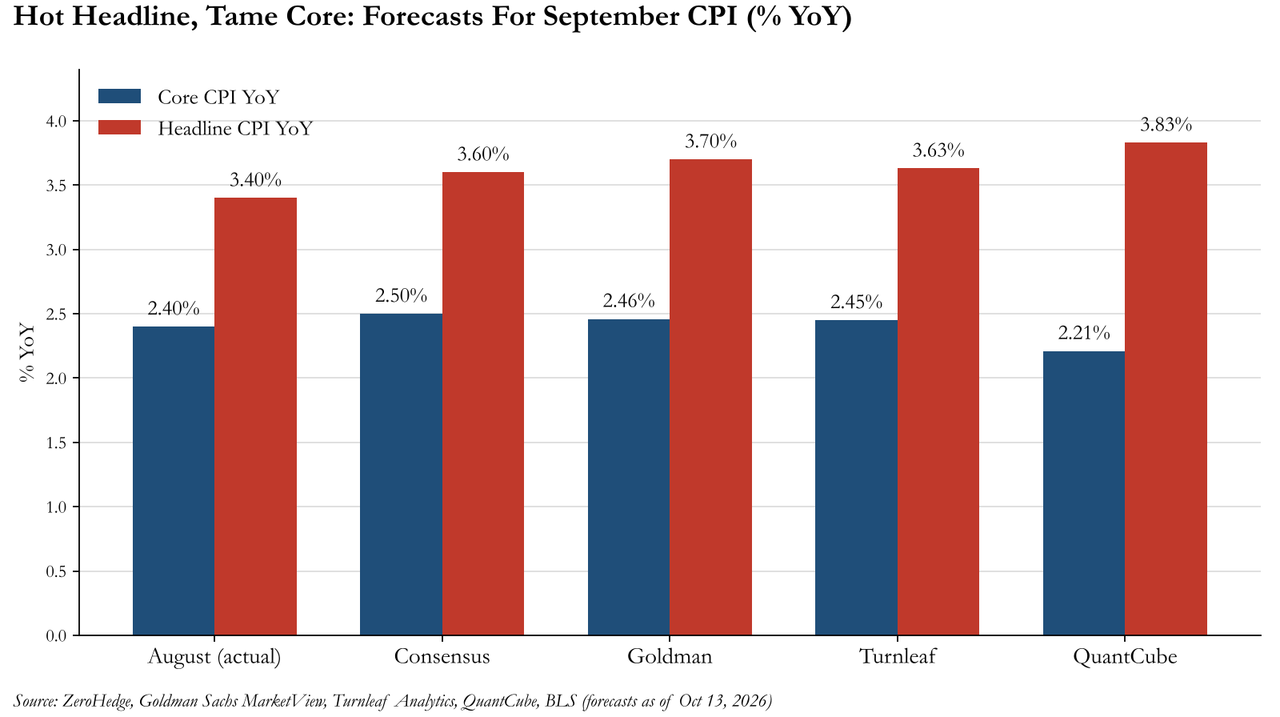
Here is where several forecasters stand. One curiosity: QuantCube’s nowcast has the softest core and the hottest headline of the bunch, a neat summary of an energy shock that (so far) refuses to bleed into everything else:
Autos Up, Shelter Down, Airfares Flying
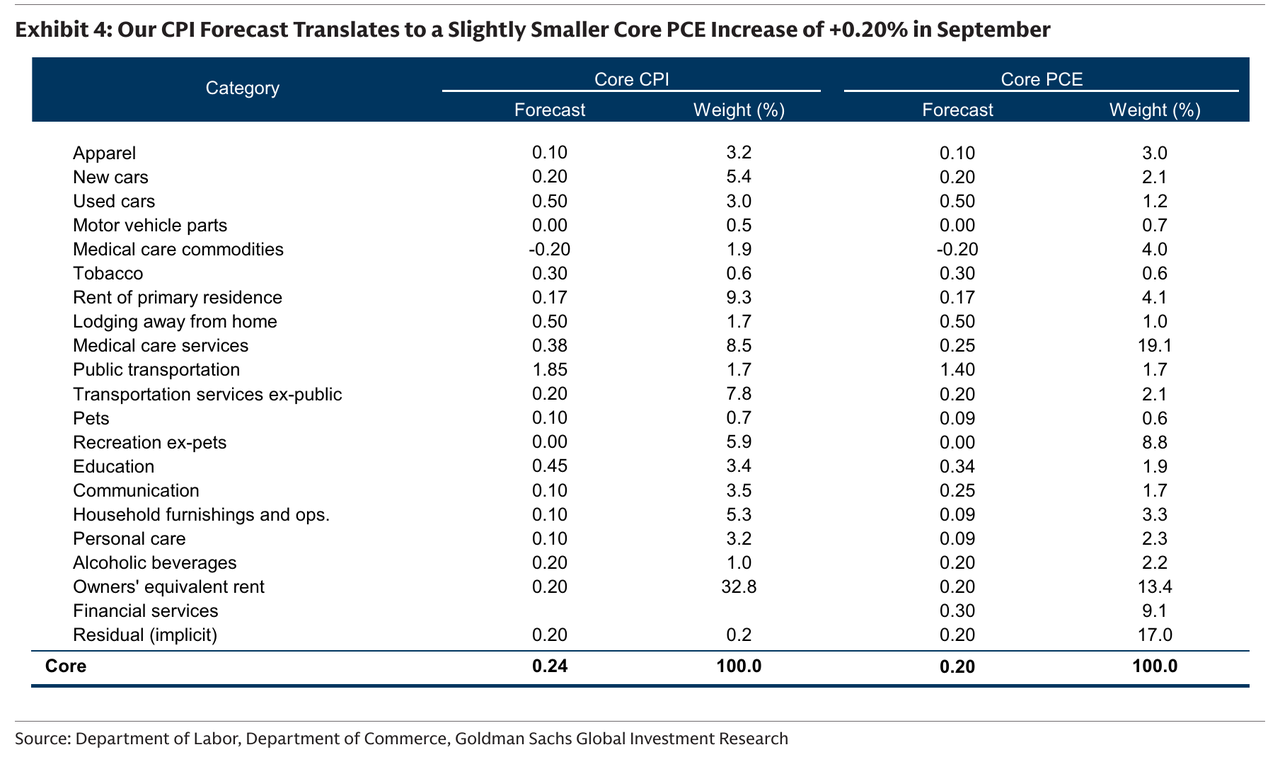
In its September CPI preview Goldman’s economists expect a 0.24% increase in core CPI (vs. +0.2% consensus), or 2.46% Y/Y (vs. 2.5% consensus), and a 0.59% rise in headline CPI (vs. +0.6% consensus), driven by higher food (+0.2%) and energy (+5.0%) prices on another jump in retail gasoline. That would put headline inflation at 3.70% Y/Y, up from 3.40% in August and a tenth above consensus. Here is the bank’s component-level breakdown:
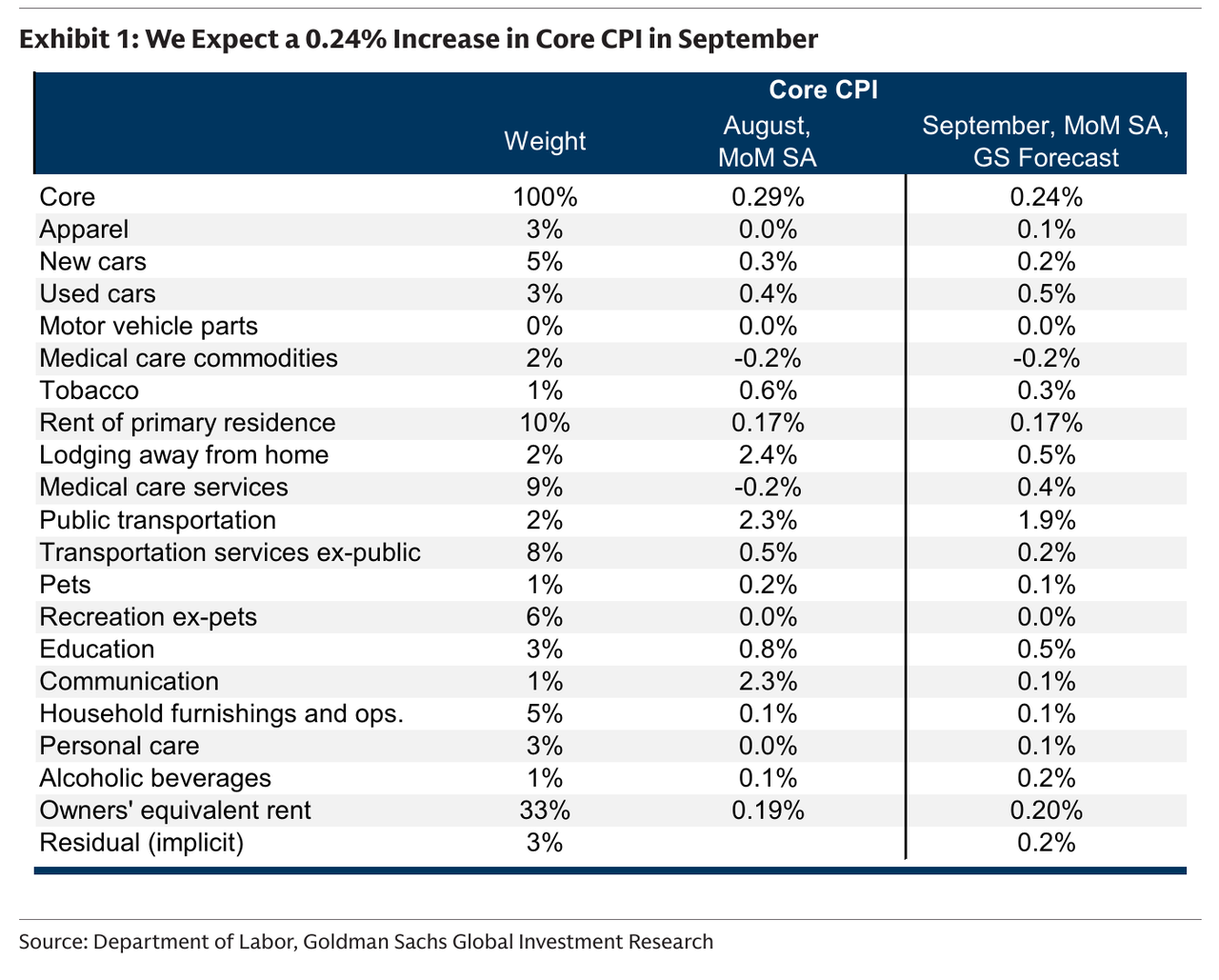
The bank highlights three key component-level trends:
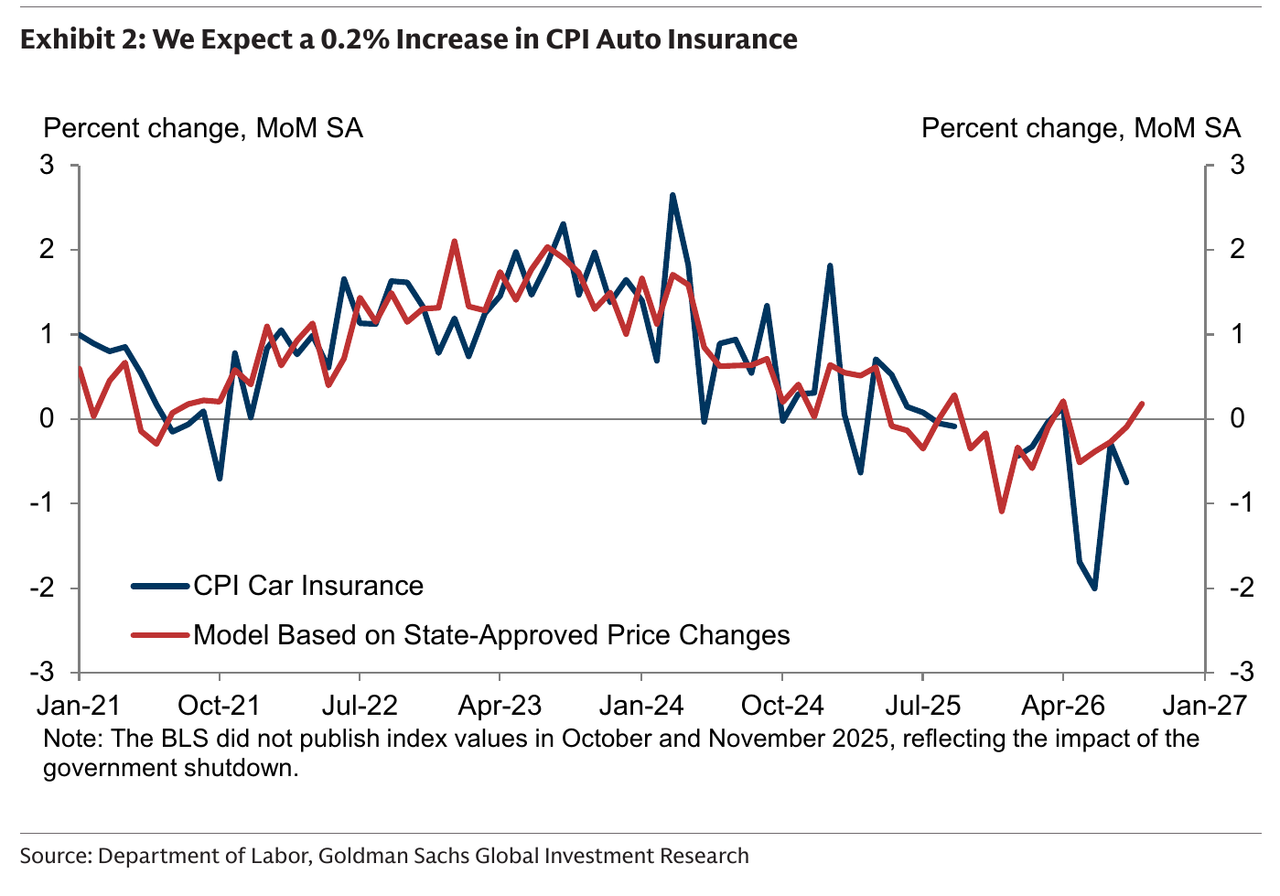
- Autos. A pickup in autos inflation, with used car prices up 0.5% (based on auction prices), new car prices up 0.2% (positive residual seasonality) and a 0.2% increase in auto insurance as Goldman’s online dataset shows premiums creeping higher again after the spring price cuts.
- Shelter. Benign readings once again: OER +0.20% and rent +0.17%, reflecting the continued slowdown in their underlying trends. With OER a third of core, this is the one thing keeping core in check.
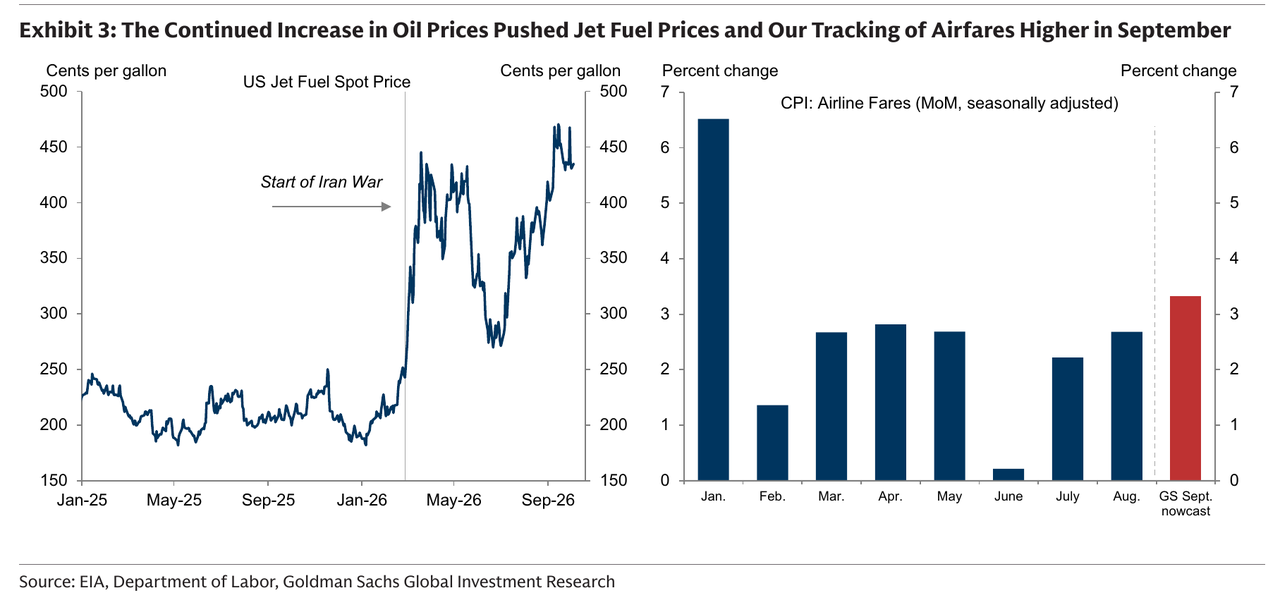
- Airfares. A 3.0% jump in airfares, reflecting passthrough from the continued surge in jet fuel prices and the signal from Goldman’s equity analysts’ tracking of online fares.
The airfare chart is the one to watch: jet fuel spot prices have roughly doubled since the start of the Iran war, and airlines have been passing on every cent of it. Regular readers will recall that we have been tracking the diesel and jet fuel squeeze for months, and as Apollo warned last month, the diesel shock is a core inflation shock; airfares are where it shows up first.
As for the Fed’s preferred gauge, Goldman’s CPI forecast translates into a slightly smaller 0.20% increase in September core PCE (due Oct 29), partly because new and used cars carry a lower weight in PCE and because PCE source data for airfares and health care services should show more moderate gains:
Looking beyond September, Goldman expects core CPI of around 0.2% in October, inflated by seasonal-factor distortions from the data the BLS never collected during last year’s government shutdown (the gift that keeps on giving), and then around 0.1% in November and December as shelter keeps slowing and tariff effects fade. That projected slowdown is why Goldman’s economists are more dovish than consensus heading into 2027. The bank’s own caveat: risks are tilted to the upside if the oil disruption proves more persistent than expected. With Brent still above $105 and the Russia/Ukraine “energy ceasefire,” in the words of Goldman’s Rich Privorotsky, unable to “survive a news cycle,” we would not bet on the downside.
And then there is AI. As we discussed on Monday, Goldman has admitted that AI blew up its inflation forecast, and the Fed is clearly paying attention. From last week’s minutes:
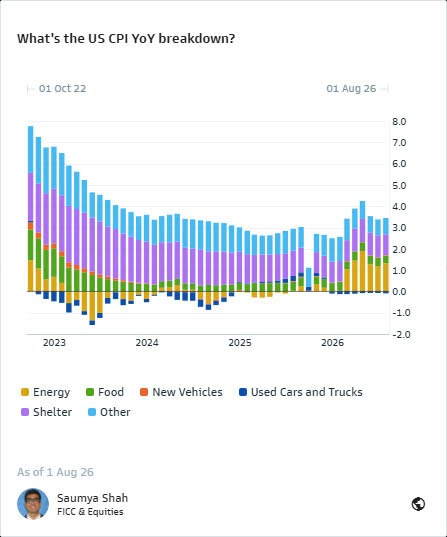
Meanwhile, households aren’t waiting for the BLS: in the latest UMich survey, one-year inflation expectations rose to 4.7%, with 5-10 year expectations at 3.5%. Here is how the headline mix has evolved; note how much of the recent lift is energy (chart source GS FICC MarketView):
Fed Implications: A Hike Is Coming… Just Not Yet
Given the Fed’s emphasis on incoming data, the September report could meaningfully shift pricing for both the October and December meetings. A benign core print would cement the “patient” camp’s case for waiting until December (or, if Goldman’s 0.1% prints for November and December pan out, for not hiking again at all). A hot, broad-based core print would revive talk of an October move, though with a hike just one week before the midterms, history isn’t on the hawks’ side: as UBS pointed out, the Fed has never hiked in October ahead of US elections.
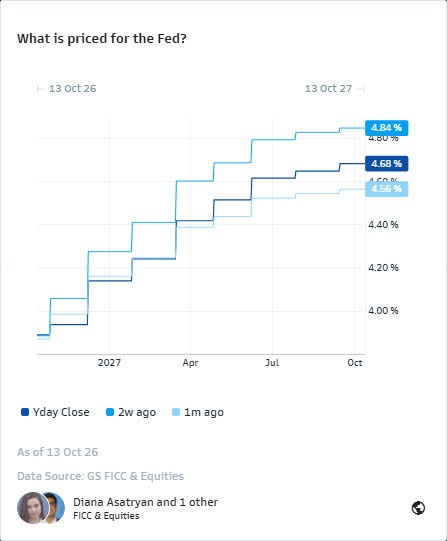
Here is what the market currently prices for the path of policy (chart source GS FICC MarketView):
Not everyone is cheering the patience.
BofA’s Michael Hartnett argued over the weekend that “The Most Bullish Thing The Fed Can Do Now Is Hike”, and with the long end still pricing a hefty term premium (more on that below), the bond market seems to agree that a Fed which sounds patient on inflation is a Fed it has to be paid extra to trust.
Market Reaction: Cheapest CPI Straddle Of The Year
Since this month there is no JPMorgan market sensitivity scenario analysis, the usual “SPX up X% if core prints below Y%” table is MIA. We’ll make do with what the options market says, and it says nobody cares.
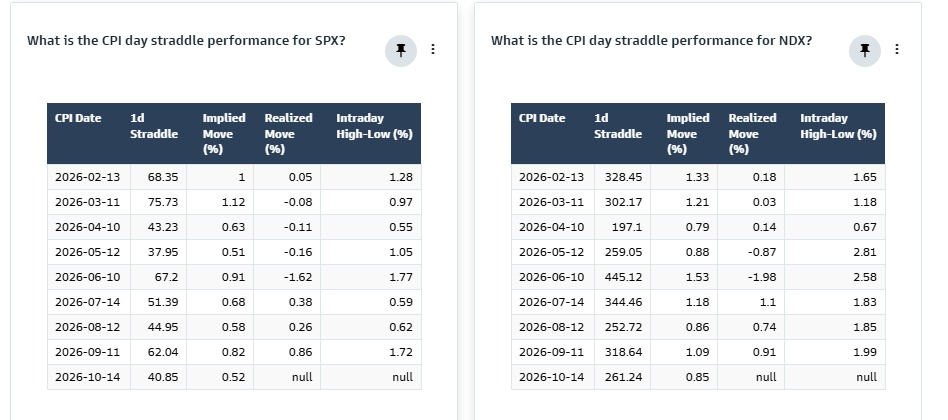
Goldman’s equity vol desk notes that the SPX straddle for Wednesday goes out at just 52bps ($41), one of the lowest CPI straddles this year and well below the 78bp average of recent events; the NDX straddle is ~85bps ($261) vs a 111bp average. And while flows were quiet on Tuesday, the desk did see a sizable buyer of SPX late-October put spreads (~$4.1mm vega in 10-delta puts), with skew steepening on persistent demand for year-end downside. Here is the CPI-day track record for SPX and NDX straddles in 2026 (chart source GS FICC MarketView):
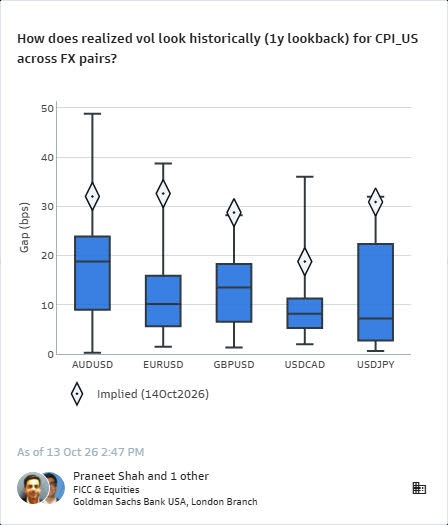
FX is a different story. Goldman’s MarketView team notes EURUSD is pricing its richest CPI event gap in a year at ~32bps (77th percentile of the 1-year distribution), with implied moves across the major pairs at 20-32bps, all above the historical upper quartile. The gap is particularly striking for USDJPY, where implied vol is more than 4x its historical median (chart source GS FICC MarketView):
Put differently, equities are priced for a non-event, FX is priced for fireworks, and rates are somewhere in between. One of them is wrong.
Thoughts From Around The Goldman Trading Desk
One-liner: Goldman’s economists are on the firm side of consensus, but the desk sees the asymmetry on the downside: a soft print would do far more damage to the hawks than a firm one would do to the doves.
- Rates. In the bank’s “What Matters Today” note, the desk flags that a 10bp downside surprise on core would be meaningful for rates. The MBS desk (Mark Flood) is less sanguine on the other side, warning that given Goldman’s 0.24% call, “a marginal beat could prove problematic for rates.” According to the Short Macro desk, real money has been a better buyer of the front end while hedge funds have been fading any rally that takes December pricing under 25bp; overall, the street feels light on risk into the print. FICC EMEA rates sales likes receiving the October FOMC on any selloff, viewing any CPI-driven revival of hike bets as an opportunity to add October receivers.
- Swaps. The GS Swaps Trading desk (Ilir Xholi) went a step further on Tuesday, recommending receiving the 10y10y swap at 5.26% (target 4.99%, stop 5.40%) on the view that the long-end term premium has run ahead of fundamentals. Between Sep 22 and Oct 7, 10y10y rose 47bp while the 2Y swap didn’t move at all, which the desk reads as pure term premium rather than Fed path. The first catalyst on its list is Wednesday’s CPI: after the soft August core PCE, “a second soft inflation print would challenge the inflation-risk premium built into the long end.” Other catalysts include the Treasury’s dealer questionnaire this Friday ahead of a refunding where the market may start to price smaller long-end auctions, something Citi just told us to expect. The risks: a hot CPI, or the energy war escalating again.
- FX Strategy. Mike Cahill (Head of FX Strategy) cautions that with Goldman on the firm side for this print, anyone hoping for a dovish shift in Fed pricing and a weaker dollar won’t get the trigger from CPI in the next few months, based on the bank’s forecasts. That said, he still sees good value in hedging for a bigger USD move given still-low implied vol.
- FX Options. Theo Alexis (FX Options Trading) notes that after the rates selloff, the dollar’s gains and the build-up of short EURUSD positioning, the volatile side of the distribution is a downside CPI surprise. Event gaps are similar across EUR, GBP, AUD and JPY at 30-32bp.
- Oil. Rich Privorotsky, Goldman’s Head of Delta One Trading, was characteristically blunt about the latest attempt to talk energy prices down: the market is distinguishing between geopolitical escalation and barrels actually lost, which he calls “a fragile equilibrium,” and so far everything short of a deal on Hormuz has been tried without much success. Translation: the energy component that drives Goldman’s 5% jump in CPI energy isn’t going anywhere fast.
The full desk commentary is available to pro subs.
Bottom Line
The consensus setup is a hot headline driven by gasoline and a tame core held in check by shelter, which is exactly the mix that lets the Fed say it is “patient” while still promising a hike by December. Goldman’s economists expect core to slide toward 0.1% by year-end and have become more dovish than consensus for 2027, while the bank’s desks see more pain from a downside miss than an upside beat.
We are less convinced the Fed gets off that easy. Energy is now the inflation story: jet fuel, diesel and gasoline are all flowing into CPI, the FOMC is openly flagging AI-driven core goods inflation, and household inflation expectations are at multi-year highs. A 0.2% core print buys the Fed a quiet October, and not much more: the winter heating bill is still in the mail. With SPX straddles at their cheapest of the year, the market is priced for the former and not at all for the latter.